
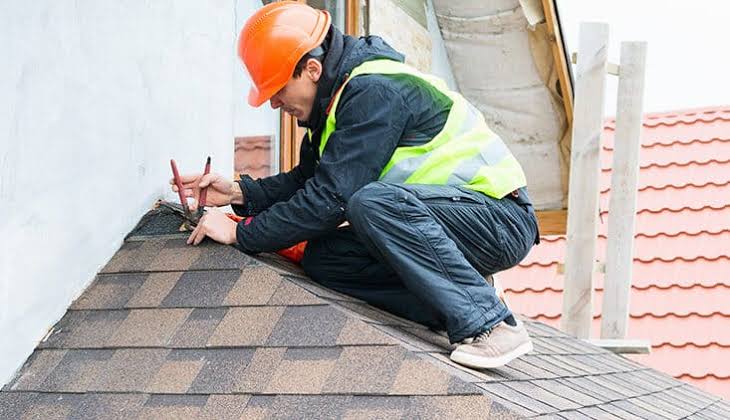
Roof Repairs, Replacements and Restorations in Dulwich - and Every Other Job a Dulwich Roof Needs
Roof repairs in Dulwich generally come down to three things: cracked ridge capping on century-old terracotta, a box gutter failing between two attached houses, or a leak nobody can trace. Minor repairs run $300 to $1,500. Full restoration is $3,500 to $7,000. Re roofing starts around $25,000 + GST.
Get a Free Dulwich Roof Quote
We respond to most enquiries the same business day.
Why a Dulwich Roof Is a Different Job to the Rest of Adelaide
Most roof repairs in Dulwich fall into a narrow set of faults: failed pointing on original ridge capping, a blocked box gutter between two attached houses, a cracked chimney flashing, or slipped terracotta after a storm. What makes roof repairs in Dulwich different is not the fault list - it is the two constraints sitting behind it.
Two facts about Dulwich change the physical work on the roof, and almost every quote written for this suburb ignores both.
Nearly one in three Dulwich homes shares a wall. In the 2021 Census, 28.5% of occupied dwellings in Dulwich were semi-detached, row or terrace houses and townhouses. Across South Australia that figure is 14.6%. Dulwich runs at close to double the state rate, in a suburb of only 741 private dwellings.
That single number decides how the job gets done. Attached dwellings mean party walls, parapets and box gutters that run between two separately owned properties. A box gutter is not a normal eave gutter — it sits inside the roof line, it has no overflow path except the downpipe, and when it blocks, the water goes into the ceiling rather than over the edge. On a detached house a blocked gutter is a nuisance. Between two attached Dulwich houses it is a ceiling collapse waiting for the next heavy autumn rain.
Attached blocks also remove side access. There is often no way to get a tip truck, a scaffold tower or a crane down the side of the property, which changes how tiles come off, how debris comes down and how long the job takes. A quote written without seeing that is a quote that gets revised halfway through.
The second fact is that Dulwich homes are worth doing properly. The median monthly mortgage repayment in Dulwich is $2,600 against $1,500 across South Australia, and median weekly household income is $2,101 against $1,455. Owner occupiers hold 68.7% of dwellings, and 40.3% own outright with no mortgage at all. These are long-held homes on high-value land, and the most common mistake we see here is not overspending - it is accepting a cheap patch on a roof that needed the real repair.
Dulwich is also overwhelmingly houses rather than units. Separate houses and attached houses together make up 98.8% of occupied dwellings; flats and apartments are just 2.1%, against 6.8% statewide. Almost every roof in this postcode is a private roof with a private owner making the decision.
Dulwich Roofs at a Glance
- Postcode 5065, City of Burnside, inner eastern Adelaide
- 741 private dwellings, 663 of them occupied, 442 families (ABS Census 2021, Dulwich SAL40379)
- 85 heritage listed properties - roughly one in nine dwellings in the suburb
- 79 of those sit inside Historic Area Overlay Bur1, where external roof changes need planning consent
- 28.5% semi-detached, row or terrace against a South Australian rate of 14.6%
- 1,263 council street trees on Dulwich streets - about 1.7 for every dwelling
- Typical Dulwich repair $300 to $1,500; restoration $3,500 to $7,000; re roofing from $25,000 + GST
Do You Need Council Approval to Change a Roof in Dulwich?
On a large part of Dulwich, yes - and this is the single most expensive thing to find out late.
Dulwich contains 85 heritage listed properties: 78 Contributory Items and 7 Local Heritage Places. In a suburb of 741 private dwellings, that is close to one home in nine carrying a heritage listing. Seventy four of them were listed in a single assessment authorised on 25 January 2007.
Seventy nine of those 85 properties fall inside Historic Area Overlay Bur1 under South Australia's Planning and Design Code. The overlay covers these Dulwich streets:
- Dulwich Avenue - 20 listed properties
- Scott Street - 14
- Gurney Road - 13
- Thornton Street - 12
- Parkstone Avenue - 10
- Everett Avenue - 8
- Stuart Road and Thornton Avenue - 1 each
Here is what that means when you stand in the driveway and look up. Inside a Historic Area Overlay, work on a Contributory Item that changes the material, profile or colour of the roof where it can be seen from the street is development, not maintenance. Replacing broken terracotta tiles with matching terracotta is maintenance. Taking that terracotta off and putting Colorbond on in its place is a change to the historic character of the streetscape, and it generally needs planning consent before anyone touches the roof.
So the honest answer for roughly one Dulwich home in nine is that tile to Colorbond conversion is not a free choice. It may still be achievable, particularly on rear roof planes not visible from the road, but it is a planning question first and a roofing question second.
Six Dulwich properties are Local Heritage Places protected in their own right, outside the overlay boundary: 11 and 15 Cleland Avenue, the shops at 64A-68 Dulwich Avenue, 275 Greenhill Road, the shops at 5A-5H Stuart Road, and 20 Stuart Road - the former Lodge and Picture Theatre known as the Melba. Work on these carries its own approval requirements regardless of which street they sit on.
One point of terminology, because it causes confusion in quotes. In South Australia, development approval is the umbrella - it is made up of planning consent and building consent. A roof job on a Contributory Item that alters the streetscape typically needs planning consent as part of that development approval. A like-for-like repair generally needs neither. If a roofer cannot tell you which of those three situations your job sits in, they have not checked.
We are roofers, not planning consultants, and we do not give planning advice. Roofing contractors Dulwich owners engage should be able to tell you which category your roof falls into before you commit, so the quote you accept is a quote that can actually be built. Confirm your property's status with the City of Burnside or through the South Australian Property and Planning Atlas at sappa.plan.sa.gov.au, and read the overlay policy itself in the Planning and Design Code.
Repair, Restore or Replace? What a Dulwich Roof Actually Needs
| What you're seeing on a Dulwich roof | The right call | Why, in this suburb specifically |
|---|---|---|
| Cracked or crumbling pointing along the ridge and hip lines of an original terracotta roof, tiles otherwise sound | Repointing and rebedding | The most common Dulwich job by a wide margin. Original ridge capping bedded in rigid sand and cement has had a century of thermal movement. Flexible repointing fixes it without touching a single tile, and it raises no heritage question at all. |
| Water staining on a ceiling shared with the neighbouring house, worse in heavy rain than light rain | Box gutter leak repair | Classic attached-dwelling failure. Light rain drains; heavy rain overwhelms a partially blocked box gutter and backs up under the tiles. Chasing ceiling stains without inspecting the box gutter wastes money on the wrong repair. |
| Faded, porous, lichen-covered tiles across the whole roof, pointing gone, but structure sound and no sagging | Roof restoration | $3,500 to $7,000 against $25,000+ for replacement, and on a Contributory Item it is usually the only whole-roof option available without planning consent, because it keeps the original material and profile. |
| Three cracked tiles, one failed flashing, a single traceable leak point | Roof repairs | Isolated faults do not need a whole-roof process. Restoring a Dulwich roof to fix three tiles is money spent on scaffolding, not on the problem. |
| Repeated leaks in different places, widespread tile deterioration, roof past 30 years, and the property is not inside Overlay Bur1 | Roof replacement | Off the heritage streets, a Dulwich re roof is a straightforward decision on merit. Tile to Colorbond is open to you and usually the better long-term answer on a house you intend to keep. |
| The same picture, but the property is a Contributory Item inside Overlay Bur1 | Get the consent question answered first | Do not accept a re roofing quote on a Bur1 property until the planning position is clear. The roof may need to be replaced in matching profile and colour rather than converted, and that changes both the method and the price. |
| Structural sagging, or rotted battens visible from inside the roof space | Roof replacement | No restoration process addresses structure. Heritage listing does not change this - it changes what the replacement roof has to look like, not whether you need one. |
| Grey fibre cement sheeting on a garage, carport or rear lean-to, often mid-century | Asbestos assessment | Rare on Dulwich main roofs, which mostly predate it, but common on post-war outbuildings and rear additions behind heritage frontages. Never drill, cut or pressure clean it before it is identified. |
The Dulwich Jobs We Do Most - Tile, Ridge Capping and Leaks
Tile roof restoration on original terracotta
Dulwich is a tile suburb, and on the heritage streets that tile is largely original terracotta rather than modern concrete. Restoration here is a slower job than on a 1990s roof: broken tiles have to be matched to a profile that has not been manufactured in decades, which means salvage stock rather than a trip to the supplier. Colour matching matters more too, because on a Contributory Item inside Overlay Bur1 the finished roof has to read as the original from the street. We work to AS 2050 for tile installation. Matching a discontinued profile is a tiling skill rather than a restoration one, and what that trade actually covers is set out on our roof tilers page. Full detail on tile roof restoration Dulwich owners can expect to run $3,500 to $7,000, priced the same as any roof restoration Dulwich job on original terracotta.
Repointing and rebedding ridge capping
This is the single most common tile roof repair we do in Dulwich. Ridge capping and hip capping on original roofs was bedded in rigid sand and cement, and a century of Adelaide thermal cycling cracks the pointing, lets water past, and eventually loosens the ridge caps themselves. Once a ridge cap has moved, every following rain drives water directly into the roof space at the highest point on the roof, which is why failed ridge capping produces leaks that look like they are coming from everywhere.
Flexible pointing compound moves with the roof instead of fighting it, which is why rebedding and repointing outlasts the rigid mortar it replaces. Because repointing keeps the original material, profile and colour, it is normally maintenance rather than development - which makes it the one major roof repair that raises no heritage question on a Bur1 property. Roof repointing Dulwich jobs run $1,500 to $3,500, or $3,000 to $6,500 with rebedding included. See roof repointing and rebedding.
Roof leak repairs and box gutters between attached houses
With 28.5% of Dulwich dwellings attached, a large share of roof leak calls in this suburb are not tile leaks at all. They are box gutters, parapet flashings and valley irons - the junctions between two buildings. These fail differently to eave gutters: they hold water rather than shed it, they are hidden from the ground so nobody sees the blockage, and the first symptom of the roof leak is usually a ceiling stain rather than an overflow.
That also makes them the most under-diagnosed roof leak in Dulwich. A tile leak announces itself in the first decent shower; a box gutter roof leak waits for the rain heavy enough to exceed the outlet, which in Adelaide might be twice a year. Owners often live with it for several seasons, assuming the ceiling mark is old. Where a box gutter sits on the boundary between two properties, the repair often needs both owners informed before work starts. Box gutters, parapet flashings and valley irons are licensed roof plumbing rather than tiling work, and where the gutter has corroded through rather than blocked, it becomes gutter repairs and replacement. More on roof leak repairs Dulwich attached houses need most.
Roof leak detection - why the stain is not the leak
The hardest part of a leaking roof is rarely the repair. It is finding where the water actually enters, because water runs along battens, rafters and sarking before it drops, and a ceiling stain can sit metres from the entry point. On a Dulwich villa with a shallow-pitch rear addition, we have traced leaks that presented in a hallway back to a failed parapet flashing on the opposite side of the roof.
Proper roof leak detection means getting into the roof space in daylight and looking for the daylight, the water tracking and the staining on the underside of the sarking - then correlating that with what the roof surface shows. Guessing from the ceiling and repointing the nearest ridge is how a leaking roof gets "fixed" three times and still leaks. On attached Dulwich houses we also check whether water has tracked into the neighbouring roof space, because on a shared box gutter it frequently has.
The three most common roof leak sources we find on this housing stock, in order: failed pointing letting water past the ridge line, a blocked or undersized box gutter backing up under the tiles, and a cracked chimney flashing. A fourth worth naming is condensation in an unventilated roof space, which produces staining that presents exactly like a roof leak and cannot be fixed by anything done on the roof surface. Telling those apart before quoting is the difference between one repair and three.
Flashings, chimneys, skylights and roof penetrations
Original Dulwich houses were built with chimneys, and chimney flashings are one of the most reliable leak sources on this housing stock. Lead or lead-substitute flashing that has lifted, cracked or been poorly re-bedded during earlier work lets water straight down the flue cavity and into the wall. The same applies at every other penetration: skylight flashings, vent pipes, aerial mounts, solar mounting feet and the apron flashing where a rear addition meets the original wall.
A skylight on a heritage roof carries its own consideration. Cutting a new roof penetration into a street-facing plane of a Contributory Item is a change to the roof visible from the road, so it sits in the same planning consent conversation as a material change. Rear planes usually do not. Existing skylight flashings can be repaired or replaced as maintenance either way.
General roof repairs
The regular Dulwich roof repair list runs to cracked and slipped tiles, failed flashings around chimneys and skylights, corroded valley irons, loose or missing ridge capping, and blocked or split downpipes. Both original terracotta and later concrete tile turn up on these streets, and they crack differently - terracotta tends to split cleanly along the profile while concrete tile crumbles at the edges and delaminates.
Typical Dulwich roof repairs run $300 to $1,500 depending on access and how much of the roof has to be walked to reach the fault. On attached blocks with no side access, allow for the extra time it takes to get materials up and debris down. Where a repair uncovers a second fault - and on a century-old roof it often does - we quote it separately rather than absorbing it silently into the job. Every roof repair Dulwich job gets a written quote before anyone climbs. See roof repairs.
Gutters, downpipes and roof drainage
Eave gutters, box gutters and downpipes are one system, and in Dulwich the tree load means the system fails at whichever point clogs first. A downpipe blocked with Jacaranda flower and Desert Ash leaf backs water up into the gutter, and a full gutter backs water under the first course of tiles. Gutter replacement is priced per linear metre including downpipes. Where a downpipe discharges to a rainwater tank or a stormwater connection under a shared driveway, we check the whole run rather than just the visible section.
Replacement, Re Roofing and Colorbond in Dulwich
Roof replacement and re roofing
A roof replacement Dulwich owners commit to starts around $25,000 to $30,000 + GST, and larger or two-storey homes run $30,000 to $40,000 + GST. The variables here are the usual ones - roof area, pitch, storeys, condition of battens and sarking - plus two that are specific to this suburb: whether the property sits inside Overlay Bur1, and whether there is side access for removal and delivery. Both are settled at the inspection, before the quote. Detail on roof replacement.
Colorbond roof replacement
Colorbond is the default answer across most of Adelaide for a roof at end of life, and on Dulwich's non-heritage streets it is ours too - lighter than tile, no repointing cycle, and a long manufacturer warranty. Inside Overlay Bur1 it is a more careful conversation. A tile to Colorbond conversion on a street-facing roof plane of a Contributory Item changes the material and profile the overlay exists to protect. Rear planes not visible from the road are a different question. We will tell you which of those you are dealing with rather than quoting first and discovering it later. See Colorbond roof replacement.
Metal roof restoration and metal roof repairs
Honestly, metal roof work is a smaller part of what we do in Dulwich than in newer suburbs, because the housing stock here is predominantly tiled. Where we do see a metal roof is on later rear additions, garages, verandah and carport roofs, and the occasional mid-century infill between the heritage frontages. Those roofs fail through fastener corrosion, sealed lap joints breaking down and rust starting at the cut edges rather than through anything resembling tile failure, so a metal roof repair is a different job to a tile repair. Restoration on this housing stock runs $55 to $75 per square metre, against $180 to $500 per square metre to replace it.
The most common metal roof fault we see behind a Dulwich heritage frontage is a low-pitch rear addition or verandah where the original screws have backed out and the neoprene washers have perished. Water then enters at every fastener across the whole metal roof rather than at one point, which is why a metal roof leak usually presents as widespread damp rather than a single drip. Re-screwing and re-sealing a sound sheet is far cheaper than replacing it. Where the metal roof itself is still structurally sound but the coating has chalked, recoating a Zincalume or Colorbond metal roof to AS 1562.1 costs a fraction of replacement. See metal roof restoration.
Roof insulation, sarking and ventilation
The one time it is genuinely cheap to fix a Dulwich roof space is while the roof is already off. Original houses on these streets were built with no sarking and often minimal ceiling insulation, and a re roof is the only practical moment to add a sarking membrane, upgrade insulation and deal with roof space ventilation. Poorly ventilated roof spaces in older attached houses trap moisture, which shows up later as staining that looks like a leak but is condensation. If you are re roofing anyway, ask for insulation and ventilation to be quoted as line items - whirlybird or ridge ventilation included - rather than discovering the opportunity after the new roof is on.
Asbestos roof replacement
Dulwich's main roofs largely predate the fibre cement era, so asbestos roofing is less common here than in the post-war suburbs. Where it does turn up is behind the heritage frontage - garages, carports, sheds and rear lean-tos added between the 1940s and the 1980s. The rule does not change with the suburb: do not drill it, cut it, or pressure clean it, and have it identified before any work starts. Licensed removal detail on asbestos roof replacement.
Emergency, Storm and Commercial Roofing in Dulwich
Emergency roof repairs
We work out of Kensington Park, 5.5 km from Dulwich, which is the reason we can make same-day emergency calls into this postcode rather than scheduling them for next week. Emergency work here is make-safe first - temporary cover, water diverted, ceiling protected - then a proper repair quoted once the roof is dry enough to assess honestly. On attached dwellings, a make-safe also means checking whether water has tracked into the neighbouring roof space, because on a shared box gutter it usually has. Emergency roof repairs Dulwich calls are answered from the same base every time, not routed through a call centre. See emergency roof repairs.
Storm damage repairs
Dulwich has an unusually heavy tree canopy for its size. The City of Burnside street tree register records 1,263 trees on Dulwich streets - about 1.7 for every private dwelling in the suburb - and the species mix is the problem. Jacaranda (268 trees), Desert Ash (175), White Cedar (101), Claret Ash (66), Golden Rain Tree (52) and Callery Pear (41) are all heavy seasonal droppers, and 48.8% of Dulwich street trees stand between 5 and 10 metres, which is canopy-over-gutter height on a single-storey villa.
That combination fills gutters faster than most Adelaide suburbs, and on an attached house with a box gutter it is the direct cause of the ceiling leaks described above.
Storm damage in Dulwich therefore arrives in three forms rather than one. Wind lifts and slips ridge capping that was already loose, and on a century-old roof there is usually some. Falling limbs from a 5 to 10 metre street canopy crack tiles on impact, and the damage is often a single localised patch rather than a whole roof. Hail cracks and chips tile surfaces and dents metal roofing and gutters, and hail damage is the one that most often needs documenting for an insurance claim - we photograph it as part of the assessment. After any storm we check gutters, downpipes and box gutters as a matter of course, not just the tiles that visibly moved, because the storm damage that costs the most is usually the drainage blockage nobody looked at. See storm damage roof repairs.
Commercial roof repairs
Dulwich's commercial roofs sit mostly along Greenhill Road, Stuart Road and the Dulwich Avenue shops - and several of them are heritage listed in their own right, including the shops at 64A-68 Dulwich Avenue and 5A-5H Stuart Road, and the former Melba theatre at 20 Stuart Road. Flat and low-pitch commercial roofs fail through membrane and flashing rather than tiles, and on a listed building the repair has the same consent considerations as a house. See commercial roof repairs.
What Roof Work Costs in Dulwich
| Job | Typical price | What moves the number in Dulwich |
|---|---|---|
| Roof repairs - cracked tiles, flashing, single leak | $300 - $1,500 | Access. On attached blocks with no side entry, materials and debris go through the front, which adds labour. |
| Repointing and rebedding ridge capping | $1,500 - $6,500 | Total ridge and hip length, not floor area. Older Dulwich rooflines with multiple gables have more capping than a modern hip roof of the same size. |
| Full roof restoration | $3,500 - $7,000 | How many broken tiles need matching. Discontinued terracotta sourced through salvage costs more than off-the-shelf concrete. |
| Roof painting, single storey up to ~250m² | around $6,500 + GST | Colour is not a free choice inside Overlay Bur1 where the roof is visible from the street. |
| Metal roof repairs | $48 - $58 per m² | Mostly rear additions and outbuildings in this suburb rather than main roofs. |
| Roof replacement / re roofing | from $25,000 - $30,000 + GST | Overlay Bur1 status, side access for removal, and whether battens and sarking need replacing once the tiles are off. |
| Large or two-storey re roof | $30,000 - $40,000 + GST | Scaffold requirements on two-storey heritage frontages. |
| Box gutter repair or replacement | Quoted on inspection | Shared boundary gutters need both properties assessed, and the scope depends entirely on what the roof space shows. |
| Asbestos roof removal | Quoted on inspection | Licensed removal, disposal and replacement priced together after identification. |
How a Dulwich Roof Job Runs
Step 1. We Check Your Property's Heritage Status First
Before we quote anything structural, we establish whether your property is a Contributory Item inside Historic Area Overlay Bur1 or a Local Heritage Place. On the eight affected Dulwich streets this determines what is even possible, so it comes before the roof inspection, not after the quote is accepted.
Step 2. Inspection of the Roof and the Roof Space
Both, not just the outside. On attached Dulwich houses the evidence of a box gutter or parapet failure is almost always visible from inside the roof space and invisible from the ground. We check gutters and box gutters as standard given the tree load on these streets.
Step 3. Honest Assessment of Repair, Restore or Replace
We do all three, so we have no reason to push you toward the expensive one. If repointing fixes it, we will tell you that rather than quoting a restoration.
Step 4. Itemised Written Quote
Every stage priced separately, with access constraints and any heritage-matched materials called out as line items rather than buried in a lump sum. Free and no obligation.
Step 5. Neighbour Notification Where a Boundary Is Involved
Where a box gutter, parapet or party wall flashing sits on the boundary between two attached properties, we identify that up front so both owners know what is happening before anyone is on the roof.
Step 6. The Work, Then a Clean Site
Debris out through whatever access the block allows, gutters cleared on completion, and a walk-through of what was done and what we found.
Straight Recommendations for Dulwich Owners
If your home is on Dulwich Avenue, Scott Street, Gurney Road, Thornton Street, Parkstone Avenue or Everett Avenue, assume it is a Contributory Item inside Overlay Bur1 and get the planning position confirmed before you accept any quote that changes roof material or colour. This affects 79 properties and it is the most expensive thing to discover after work has started.
If your ceiling stains only in heavy rain and you share a wall with the house next door, have the box gutter inspected before you spend anything on tiles. Heavy-rain-only leaks on attached dwellings are a drainage problem, not a tile problem, and repointing will not fix it.
If your terracotta pointing is cracked but the tiles are sound, repoint rather than restore or replace. It is the cheapest of the three, it addresses the actual failure, and on a heritage property it is the one major job that raises no consent question.
If your roof is genuinely at end of life and you are not inside Overlay Bur1, go to Colorbond rather than re-tiling. Lighter, no repointing cycle, and a longer warranted life on a house you intend to hold. If the tiles are sound and it is only the colour that has gone, roof painting is the cheaper answer - though on a Bur1 property the colour itself becomes a planning question. Roof painting Dulwich jobs on a Contributory Item are checked against the overlay before any colour is agreed.
If your roof is at end of life and you are inside Overlay Bur1, budget for replacement in matching profile rather than conversion, and treat any quote that does not mention the overlay as a quote written by someone who has not checked.
If your house is attached and you have never had the box gutter cleared, put it on a cycle rather than waiting for the ceiling to stain. Scheduled roof maintenance on a Dulwich box gutter costs a fraction of the ceiling repair it prevents, and the inspection is free.
If there is grey fibre cement on your garage, carport or rear lean-to, do not pressure clean it, drill it or cut it. Have it identified first. This is the most common asbestos scenario in Dulwich and it sits behind heritage frontages constantly.
Roofers Servicing Dulwich and the Surrounding Streets
We are based at 333 Glynburn Road, Kensington Park - 5.5 km from Dulwich, which is what makes same-day and emergency work into postcode 5065 realistic rather than aspirational. If you have been searching for a roofer near me from a Dulwich address, that distance is the whole answer: we are not dispatching from the other side of the metro area. Roofer Dulwich searches and roofers Dulwich searches turn up the same handful of names for exactly that reason - proximity narrows the field fast.
Dulwich is one of the suburbs covered by Adelaide Roof Repairs, and the full range - repairs, restoration, replacement and emergency work - is available here on the same terms as everywhere else in the catchment. Dulwich shares postcode 5065 with Tusmore, Toorak Gardens and Linden Park, and shares its housing pattern and heritage overlays with a tight ring of neighbours. We work across Rose Park, Beulah Park and Eastwood, where the same attached-dwelling and Contributory Item questions come up, and out through Norwood, St Peters, Marryatville, Kensington Park and Burnside. The roofs on these streets have the same century of thermal movement in the ridge capping and the same tree load in the gutters, and they are quoted the same way.
Whether the job is a $300 tile repair, a reroof, or a full roof restoration, the quote is free, itemised and given in writing after an on-site inspection. We are licensed and insured, and the workmanship guarantee applies across Adelaide's eastern suburbs the same way it applies in Dulwich.
FAQs
Common Questions About Roofing in Dulwich
Do I need council approval to replace my roof in Dulwich?
On roughly one Dulwich property in nine, yes. Seventy nine Dulwich properties sit inside Historic Area Overlay Bur1, where changing the material, profile or colour of a roof that is visible from the street is development rather than maintenance and generally needs planning consent. Repairs and repointing in matching materials normally do not. Confirm your property's status with the City of Burnside before committing to any quote.
How do I know if my Dulwich house is a Contributory Item?
Check the street first. Historic Area Overlay Bur1 covers listed properties on Dulwich Avenue, Scott Street, Gurney Road, Thornton Street, Parkstone Avenue, Everett Avenue, Stuart Road and Thornton Avenue. You can confirm an individual address through the South Australian Property and Planning Atlas at sappa.plan.sa.gov.au, or by contacting the City of Burnside. We check this as the first step of any Dulwich quote.
Can I put a Colorbond roof on a heritage listed Dulwich home?
Not automatically. On a Contributory Item inside Overlay Bur1, converting street-facing terracotta to Colorbond changes exactly the material and profile the overlay protects, so it is a planning question before it is a roofing one. Rear roof planes that cannot be seen from the road are treated differently. Off the heritage streets, Colorbond is straightforward and usually the better long-term choice.
Who is responsible for a box gutter between two attached houses?
It depends on where the boundary sits relative to the gutter, and it is worth establishing before work starts rather than after. In practice both owners have an interest, because a failure drains into both roof spaces. We identify the arrangement at inspection and make sure both parties know what is proposed, since access is often needed from both sides.
Why does my Dulwich roof only leak in heavy rain?
That pattern points to drainage rather than the tiles. A partially blocked box gutter or valley drains fine in light rain and overflows backwards under the roof covering when the volume rises. Given 28.5% of Dulwich dwellings are attached and the suburb carries 1,263 street trees, blocked box gutters are one of the most common causes of leaks here. Repointing will not fix it.
What does it cost to repoint ridge capping on a Dulwich villa?
Repointing runs $1,500 to $3,500 and rebedding with repointing $3,000 to $6,500, priced on total ridge and hip length rather than floor area. Older Dulwich rooflines with multiple gables carry more capping than a modern hip roof of the same footprint, so they sit higher in that range. It is the most common job we do in this suburb and the one that raises no heritage consent question.
How quickly can you get to Dulwich in an emergency?
We work out of Kensington Park, 5.5 km away, and run same-day emergency response into postcode 5065. Emergency work is make-safe first - temporary cover, water diverted, ceiling protected - with the permanent repair quoted once the roof is dry enough to assess properly.
Is asbestos likely in my Dulwich roof?
Less likely in the main roof than in most Adelaide suburbs, because Dulwich's housing stock largely predates fibre cement roofing. It is common in later additions - garages, carports, sheds and rear lean-tos built between the 1940s and 1980s behind original frontages. Do not drill, cut or pressure clean grey fibre cement sheeting. Have it identified first.
How do you find a roof leak when the ceiling stain is in the wrong place?
Roof leak detection starts in the roof space, not on the ceiling. Water runs along battens, rafters and sarking before it drops, so a stain can sit metres from where the water enters. We inspect the roof space in daylight, follow the water tracking and staining back to the entry point, then correlate that with the roof surface. Guessing from the ceiling is how a leaking roof gets repaired three times and still leaks.
Do I need approval to put a skylight in a Dulwich roof?
If your property is a Contributory Item inside Historic Area Overlay Bur1 and the skylight would go into a roof plane visible from the street, that is a change to the roof as seen from the road and sits in the same planning consent conversation as a material change. Rear planes that cannot be seen from the road usually do not. Repairing or replacing an existing skylight flashing is maintenance either way.
How often should Dulwich gutters be cleaned?
Twice a year is realistic on these streets rather than the usual annual advice, because Dulwich carries 1,263 council street trees at about 1.7 per dwelling and the dominant species - Jacaranda, Desert Ash, Claret Ash, White Cedar, Golden Rain Tree - are heavy seasonal droppers. Clear once after the autumn leaf drop and once before winter. On an attached house with a box gutter, treat it as maintenance rather than housekeeping.
Do you offer free quotes, and is the work guaranteed?
Every quote is free and itemised, with no obligation - we inspect the roof and the roof space, confirm your heritage overlay status and price each stage separately. We are licensed under the Building Work Contractors Act 1995 and fully insured, and all workmanship is backed by a guarantee on top of any manufacturer product warranty on materials.
Do you replace tiles that are no longer manufactured?
Yes. Original terracotta profiles on Dulwich's heritage streets have not been made in decades, so matching tiles are sourced through salvage rather than a supplier. It costs more and takes longer than a modern concrete profile, and on a Contributory Item inside Overlay Bur1 it is usually the only compliant option, because the finished roof has to read as original from the street.
Roofing Services We Provide in Dulwich
Roof Repairs
Cracked tiles, failed flashings, valley irons and capping. Typical Dulwich repairs $300 to $1,500.
Read more →Roof Restoration
Clean, repair, rebed, repoint and coat. $3,500 to $7,000, and usually the compliant whole-roof option on a heritage property.
Read more →Roof Repointing & Rebedding
The most common Dulwich job. Flexible pointing on century-old ridge capping, with no heritage consent question.
Read more →Roof Replacement
Full re roofing from $25,000 + GST, quoted with your Overlay Bur1 status and site access established first.
Read more →Get a Free Quote for Roof Repairs in Dulwich
Free quote, free on-site inspection, no obligation. We check your Historic Area Overlay status, inspect the roof and the roof space, and give you an itemised written quote for roof repairs, restoration or replacement anywhere in Dulwich 5065 and the eastern Adelaide suburbs. Based 5.5 km away in Kensington Park. We are a licensed roofing contractor based 5.5 km away in Kensington Park.