
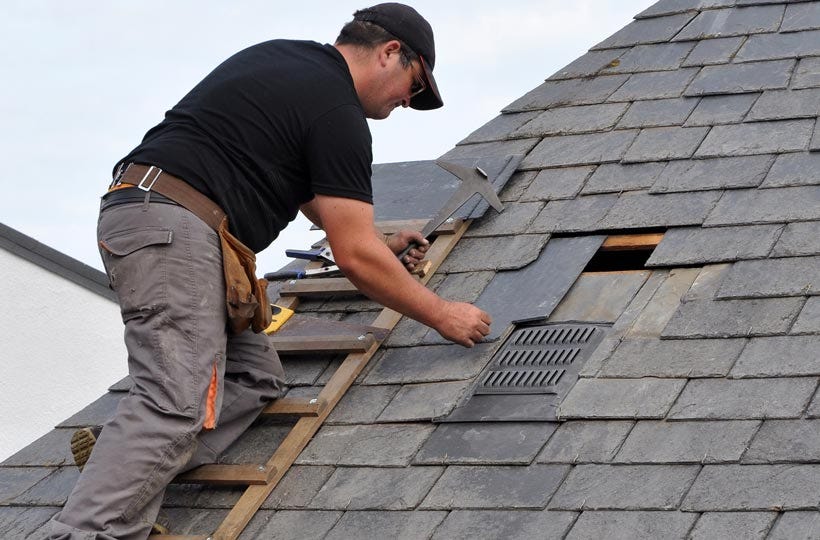
Emergency Roof Repairs and Storm Damage Repairs Adelaide Eastern Suburbs
Emergency roof repairs and storm damage roof repairs in Adelaide are available 24/7, with same-day make-safe on active leaks, hail damage, fallen branches and wind-lifted tiles. We stop the water first, then quote the permanent repair separately. Emergency roof repair cost runs $300 to $1,500 for most callouts and up to $8,000 where storm damage is structural. $0 call out.
Urgent? Call. Otherwise Leave Details
We respond to most enquiries the same business day.
We stop the water tonight. We fix the roof afterwards.
An emergency callout is not the repair - it is the make-safe. We attend, find where the water is entering, and secure it so the ceiling stops taking water. The permanent repair is scoped, quoted and booked separately once the roof is dry and safe to work on properly. Separating the two is what keeps an emergency from turning into a rushed decision on a large job. $0 call out, 24/7.
What Counts as a Roof Emergency
If water is entering the building, it is an emergency. Everything else is triage.
Emergency roofing services get called a lot of things - urgent roof repairs, same day roof repair, emergency roof leak repair, 24 hour roof leak repair - and they all describe the same callout. These are the emergency roof repairs we attend most, and roughly in the order we prioritise them when several calls land at once:
- Active leaks through the ceiling. Emergency roof leak repairs are the bulk of what we do overnight - water coming through plasterboard during rain. This is the highest priority we run, because a saturated ceiling can collapse and because the damage compounds every hour. Emergency ceiling leak repair is a containment job first and the roof work follows, so emergency ceiling repair and the roof repair above it are usually two separate visits.
- Storm, hail and wind damage. Lifted or torn sheets, smashed tiles, displaced ridge caps and wind-torn flashing. Covered in full below.
- Fallen branches and tree impact. A limb through the roof is structural, not cosmetic. We secure the area, make the roof watertight, and assess battens and rafters before anything else happens.
- Missing or displaced tiles after wind. A gap in the roof surface is a leak waiting for the next downpour, even when nothing is dripping yet. Emergency roof tile repair on a handful of tiles is a small job that prevents a large one.
- Blocked and overflowing gutters in heavy rain. Storm debris backing water up under the tiles and into the eaves. Often mistaken for a roof leak because the symptom is identical - see gutter repairs and replacement.
- Failed valleys and flashings. Rusted valley irons and perished flashing around penetrations, which fail suddenly rather than gradually once they go.
- Emergency roof leaks with no visible cause. Water appearing with nothing obviously wrong from the ground. These take longer to find, which is why we make safe first and diagnose second.
What is not an emergency, and we will tell you so on the phone rather than charge you for a night callout: a damp patch that is not spreading, hail dimples in Colorbond with no penetration, a single cracked tile in dry weather, or moss and staining. Those are roof repairs at $300 to $1,500 in normal hours.
Storm, Hail and Wind Damage
Adelaide storm damage is rarely the roof coming off. It is almost always the roof being opened just enough to let the next rain in.
A front comes through, wind lifts a run of tiles or peels a sheet edge, and nothing leaks that night because the rain has passed. The leak arrives a fortnight later during ordinary weather, by which time the owner has stopped connecting it to the storm.
What we actually find after severe weather in the eastern suburbs:
- Wind-lifted and displaced tiles. The most common form of roof tile damage by a wide margin. Tiles do not need to be missing to fail - a tile lifted and dropped back out of its interlock leaks exactly like a missing one.
- Ridge caps unseated. Wind gets under a cap with failed pointing and moves it. Related work sits on roof repointing and rebedding.
- Lifted sheet edges and torn flashing on metal roofs, usually where fasteners were already loose.
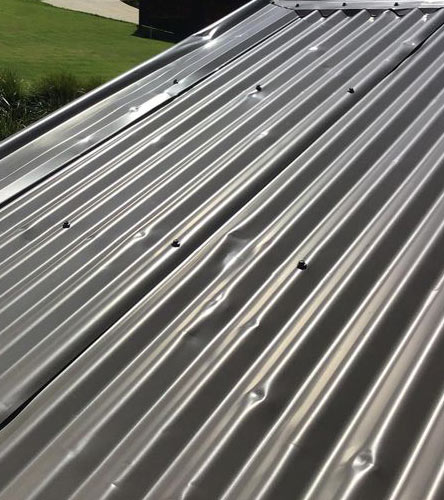
- Hail-cracked tiles. Concrete and terracotta both crack under hail, and the cracks are frequently invisible from the ground. Hail rarely penetrates Colorbond but does dent it, which is cosmetic rather than a leak.
- Branch and debris impact. The obvious damage plus, often, a second area of cracked tiles where debris landed and was blown clear.
- Blocked valleys and gutters full of storm debris, causing water to back up under the roof surface.
The reason a post-storm inspection matters is that roof damage does not present symmetrically. Damage sits on the weather side, which is frequently the side you cannot see from your own driveway. We check the full roof, not the elevation facing the street.
Roof repair water damage claims are the most common insurance conversation we have after a front comes through, and roof and water damage repair are genuinely two jobs - we handle the roof, and the ceiling and plaster work follows separately. Water damage and roofing get quoted together far too often, which is how people end up paying for interior work before the roof is actually watertight. Roof water damage that traces back to a storm also behaves differently inside the building. Water entering at a lifted tile runs along battens before it drops, so the stain on your ceiling is rarely underneath the fault. Water damage in roof spaces frequently shows up in insulation and framing well before it shows on the ceiling below.
Storm damage on an Adelaide tile roof. Lifted tiles and unseated ridge caps like these frequently do not leak until the next ordinary rainfall, weeks after the storm that caused them.
What to Do Before We Arrive
Everything here is about protecting the inside of your house. None of it involves going onto the roof, and you should not.
A temporary roof leak fix from inside is genuinely worth doing while you wait, and almost nobody explains how. Everything below is a temporary roof repair from inside the house - a temporary fix for leaking roof inside your ceiling space, not a repair to the roof itself.
If water is coming through the ceiling:
- Put a container under it, and put a towel in the container. It stops the noise and stops water splashing out.
- If the ceiling is bulging, pierce it deliberately. This feels wrong and it is the right call. A bulge is a pocket of water sitting on plasterboard, and a saturated ceiling sheet can come down all at once. Push a screwdriver through the lowest point of the bulge with a bucket underneath and let it drain in a controlled way. One small hole is a far cheaper repair than a collapsed ceiling.
- Move furniture, electronics and anything valuable out from under the affected area, and lift rugs.
- Turn off power to the affected circuits if water is anywhere near a light fitting, a downlight or a ceiling fan. Water and ceiling wiring is the genuine danger in a roof leak, well ahead of the water damage itself.
- Photograph everything before you move it or mop up. If this becomes an insurance claim, the photos taken while it is happening are worth more than anything taken afterwards.
In the roof space, only if you can access it safely and the power is off:
- Put a bucket or a plastic tub under the drip where it is entering.
- Lay plastic sheeting over insulation to keep water off it and direct it into the container.
- Do not walk anywhere except on the ceiling joists.
What not to do. Do not climb onto a wet roof, in the dark, or in wind - that is the single most common way a roof leak becomes a hospital visit. Do not apply an emergency roof repair paint or sealant to a wet surface, because it will not bond and it makes the eventual proper repair harder. And do not pull down wet plasterboard yourself if it is holding water above it.
That is the temporary solution for leaking roof problems, and it is as far as a temporary roof leak repair should ever go without a roofer. It buys you the hours until we get there, and it is the difference between a ceiling patch and a ceiling replacement.
Make-Safe vs Permanent Repair
| Factor | Emergency make-safe | Permanent repair |
|---|---|---|
| What it does | Stops water entering the building now | Fixes the fault that let the water in |
| When it happens | 24/7, same day, on the call | Booked once the roof is dry and safe to work on properly |
| Typical methods | Tarping, temporary sealing, resetting displaced tiles, clearing blocked valleys, internal containment | Tile or sheet replacement, reflashing, repointing, valley replacement, structural repair |
| How long it lasts | Days to weeks. It is a holding measure, not a repair | Years. It is the actual fix |
| Cost | Within the $300 to $1,500 callout band for most jobs | Quoted separately on its own merits, after inspection |
| Weather dependent | Yes - we cannot work on a roof in lightning or high wind | Yes - coatings, sealants and mortars all need dry conditions |
| Why they are separate | So the urgent decision is small and cheap | So the expensive decision is made calmly, with a proper quote, not at 11pm with water coming in |
Emergency roofing solutions are holding measures by design - that is the point of them. Any emergency roofing company that quotes a full repair while standing on your roof in the rain is quoting a job nobody has properly inspected. Make safe first, price the repair second.
24/7 Means We Answer. It Does Not Mean We Do Everything at 2am
We take emergency calls 24 hours a day, seven days a week, and we attend 24/7. That is the honest version, and it comes with one limit worth stating plainly rather than burying in an asterisk.
Nobody should be on a tile roof during an electrical storm, in high wind, or on wet tiles in the dark. A roofer who promises to be on your roof within two hours regardless of conditions is either not going to do it or is going to do something unsafe. Every roof fall in this trade happens in exactly those conditions.
So what a 24 hour roof repair call actually gets you, at the time you make it:
- Someone who answers, not a message bank. That alone separates most 24 hour roofing services from the ones that only claim it, and it is the first thing worth testing on any emergency roofing company you ring.
- Triage over the phone. We work out whether this needs someone now, at first light, or in normal hours - and we will tell you when it is the third one.
- Guidance on internal containment, the steps in the section above, so the damage stops compounding while you wait.
- Attendance as soon as it is safe to work, which in most conditions is immediately, and in a genuine storm is at first light.
Plenty of emergency roofers, emergency roofing contractors and sameday roofing outfits advertise the hours without staffing them. In practice, the large majority of 24 hour emergency roof repair calls we take between midnight and dawn are resolved with containment advice on the phone and a first-light attendance. That is not us declining to come out. It is the sequence that actually protects the building, because internal containment does more in the first four hours of a storm than anything anyone can do on a roof in the middle of it.
Emergency Roof Repair Cost in Adelaide
| Scope | Cost | What it covers |
|---|---|---|
| Emergency callout and make-safe, most jobs | $300 - $1,500 | Emergency roof repair services cover attendance, diagnosis, and securing the entry point. Tarping, temporary sealing, resetting displaced tiles or clearing a blocked valley. |
| Call out fee | $0 | No callout fee and no separate leak detection charge, at any hour. |
| Storm damage repair, full range | $500 - $8,000 | Published Adelaide market range. Varies enormously with extent - most claims sit from $1,500 up. |
| Fallen branch or structural impact | Quoted on inspection | Battens, rafters and roof structure assessed before any surface repair is priced. An emergency roof replacement is almost never the right call on the night - make safe first. |
| Permanent repair after make-safe | $300 - $1,500 typical | See roof repairs. Larger faults are quoted on their own merits. |
| Whole-roof causes found during an emergency | $1,500 - $7,000 | Failed ridge pointing across the roof is repointing; a failed surface is restoration. |
Roof damage repair cost after a storm varies more than any other roofing job, because the extent is not knowable until someone is on the roof. Anyone quoting a storm repair over the phone is guessing. We attend, make safe within the callout band, then quote the repair in writing.
Insurance Claims and What to Document
Most storm and impact damage is claimable on home building insurance. Most gradual deterioration is not, and the line between them is where claims get declined.
What insurers generally cover: sudden damage from a single identifiable event - storm, hail, wind, fallen tree, impact.
What they generally do not: wear and tear, rust, perished flashing, failed pointing, and damage they can argue resulted from lack of maintenance. This is why a storm that finishes off an already-failing roof frequently becomes a partial claim rather than a full one.
What actually helps a claim:
- Photographs taken during the event, before anything is moved or cleaned up.
- The date and time of the weather event, so the damage can be tied to it.
- A written report from the roofer describing the damage and its cause in the insurer's language - sudden, storm-related, not pre-existing.
- Keeping the make-safe receipt separate from the repair quote. Insurers usually cover emergency make-safe as a distinct item, and mixing it into a repair invoice muddies both.
- Not disposing of damaged material until the assessor has seen it or you have photographed it thoroughly.
We provide written damage documentation on every storm callout as standard, because it costs us nothing and it is frequently the difference between a claim paid and a claim argued. We do not lodge or negotiate claims on your behalf - that is between you and your insurer - and we will not describe pre-existing deterioration as storm damage, on a report or anywhere else.
Is It an Emergency, or Can It Wait
| What is happening | When to call | Why |
|---|---|---|
| Water coming through the ceiling now | Tonight | Damage compounds hourly and a saturated ceiling can collapse. Highest priority we run. |
| Tiles off or a hole visible after wind | Tonight or first light | The roof is open. Nothing is leaking only because it is not raining yet. |
| Branch or tree on the roof | Tonight | Structural, and the load is still sitting on the roof. Do not attempt to remove it yourself. |
| Ceiling bulging with trapped water | Tonight - and drain it yourself first | See the containment section above. A controlled hole is far cheaper than a collapsed ceiling. |
| Gutter overflowing in heavy rain | Next dry day | Usually a blockage rather than a roof fault, though it can push water into the eaves. See gutter repairs. |
| Damp patch that is not spreading | Normal hours | An old stain or a slow fault. Diagnosis matters more than speed - see roof leak repairs. |
| Hail dimples in Colorbond, no leak | Normal hours | Cosmetic. Worth documenting for insurance, but the roof is not compromised. |
| One cracked tile, dry weather | Normal hours | A standard roof repair at $300 to $1,500. Paying an emergency rate for it helps nobody. |
We would rather tell you on the phone that something can wait until Tuesday than charge you for a night callout that did not need to happen.
Getting to You Across the Eastern Suburbs
Emergency roof repairs Adelaide wide are dispatched from a base in Kensington Park, which puts most of the eastern suburbs inside a fifteen to twenty minute run in normal traffic - Burnside, Norwood, St Peters, Toorak Gardens, Dulwich, Kensington, Magill and Rostrevor.
Three things about this catchment genuinely affect an emergency callout:
Tree cover. The eastern suburbs are heavily treed, and mature street and garden trees are the single biggest cause of impact damage and blocked valleys here. In Dulwich alone there are 1,263 council street trees, roughly 1.7 for every dwelling. After a front comes through, the calls we get from these suburbs are disproportionately branch strikes and debris-blocked valleys rather than wind-lifted sheeting.
Access on older blocks. Narrow side access on character homes, and no side access at all on attached dwellings, means ladders and materials come through the front. At night, in rain, that is slower - and it is worth knowing when we give you an ETA.
Roof age and material. Century-old terracotta is brittle and cannot be walked the way concrete tile can, so an emergency make-safe on an original Burnside or College Park roof is done off boards and ladders rather than by walking the surface. It takes longer and it is the only safe way to do it without turning one problem into forty broken tiles.
Beyond emergencies, the full range of Adelaide roof repairs we handle across this catchment is on the homepage.
How an Emergency Callout Works
Step 1. You call, 24/7
A person answers, not a message bank. We ask what is happening, how much water is coming in and where, and triage by severity. If it can safely wait until morning we will tell you.
Step 2. Containment advice on the phone
Before we arrive, we talk you through protecting the inside - containers, draining a bulging ceiling safely, isolating power near wet fittings, and moving valuables clear.
Step 3. We attend, with an honest ETA
Same-day attendance, and immediately where conditions allow. In an electrical storm or high wind, first light - because nobody should be on a wet roof in either. $0 call out at any hour.
Step 4. Find the entry point
Water tracks along battens before it drops, so the fault is rarely above the stain. We find where it is actually entering rather than sealing the nearest suspicious thing.
Step 5. Make safe
Tarping, temporary sealing, resetting displaced tiles or clearing the blocked valley - whatever stops the water. This is a holding measure and we will say plainly how long it will hold.
Step 6. Document for insurance
Photographs and a written description of the damage and its cause, provided as standard on storm callouts, with the make-safe itemised separately from any repair quote.
Step 7. Quote the permanent repair
Once the roof is dry and properly inspected, the real repair is scoped and quoted in writing, with no obligation. You decide on it in daylight, not during the emergency.
FAQs
Emergency Roof Repair Questions
How much do emergency roof repairs cost in Adelaide?
Most emergency callouts run $300 to $1,500, covering attendance, finding the entry point and making the roof safe. There is no call out fee and no separate leak detection charge, at any hour. Storm damage repair across its full range runs $500 to $8,000 depending on extent, with most claims sitting from $1,500 up. The permanent repair is quoted separately after inspection.
Do you really operate 24 hours a day?
Yes - we answer and attend 24/7. The one limit we state plainly rather than hide in an asterisk is that nobody should be on a tile roof during an electrical storm, in high wind or on wet tiles in the dark. In those conditions we give containment guidance on the phone and attend at first light, which genuinely protects the building better than anything that can be done on a roof mid-storm.
What should I do while I wait for you to arrive?
Protect the inside and stay off the roof. Put a container under the drip, move valuables clear, and turn off power to any circuit near a wet light fitting. If the ceiling is bulging, pierce the lowest point with a screwdriver and a bucket underneath - a controlled hole is far cheaper than a collapsed ceiling. Photograph everything before you clean up, in case it becomes a claim.
Will you do a temporary fix first and come back for the full repair?
Yes, and that is deliberate. The emergency callout is a make-safe that stops water entering the building. The permanent repair is scoped and quoted separately once the roof is dry and can be properly inspected. Splitting them keeps the urgent decision small and cheap, and stops you committing to a large job at 11pm with water coming through the ceiling.
Is storm damage covered by insurance?
Sudden damage from an identifiable event - storm, hail, wind, fallen tree, impact - is generally covered. Wear and tear, rust, perished flashing and failed pointing generally are not, which is why a storm finishing off an already-failing roof often becomes a partial claim. Photographs taken during the event, the date of the weather, and a written report describing the damage as storm-related all help. We provide the documentation as standard.
How quickly can you get to my property?
Most of the eastern suburbs are fifteen to twenty minutes from our Kensington Park base in normal traffic - Burnside, Norwood, Toorak Gardens, Magill, Dulwich and surrounds. We give you an honest ETA on the call rather than a fixed guarantee, because after a major front there may be several active leaks ahead of you and we triage by severity.
My roof leaked during a storm two weeks ago but nothing is happening now. Is it urgent?
It is worth an inspection rather than an emergency callout. Storm damage frequently does not leak immediately - wind lifts tiles out of their interlock, the rain passes, and the leak appears during ordinary weather weeks later. A dry roof with known storm exposure should be inspected in normal hours, because the damage is there whether or not it is currently raining.
Can you handle emergency commercial roof repairs?
Yes. Commercial and industrial roofs generally mean flat or low-pitch membrane and metal deck rather than tile, and the failure modes differ - ponding, membrane splits and failed penetrations rather than lifted tiles. The emergency sequence is the same: attend, make safe, document, then quote the permanent repair. See commercial roof repairs for the full scope.
Do you need to get inside the house?
Usually yes, at least briefly. Water tracks along battens and rafters before it drops, so the ceiling stain is rarely underneath the actual fault. Seeing where the water is presenting inside, and getting into the roof space where access allows, is often what locates the entry point quickly rather than after an hour of guessing on the roof.
Are you an emergency roof plumber or a roofer?
Both trades overlap on emergency work. Roof plumbing covers guttering, downpipes, flashings and stormwater; roofing covers the roof surface itself. Most emergency callouts involve both - a blocked valley is roof plumbing, the cracked tiles above it are roofing. We handle the whole callout rather than sending you to a second trade. See roof plumber Adelaide for where the line sits.
What if the damage turns out to need a whole new roof?
Then we say so, and we do not decide it during the emergency. The make-safe stops the water regardless. A full roof replacement is a $25,000 to $40,000 + GST decision that should be made in daylight with a written quote and, if insurance is involved, an assessor's input. Nobody should be signing for a re roof at midnight.
What We'd Actually Recommend
Protect the inside first and stay off the roof. Every serious injury in this trade happens on wet roofs in bad weather and poor light. Containers, power off near wet fittings, and a controlled hole in a bulging ceiling will do more in the first hour than anything you could achieve up a ladder.
Photograph everything before you clean up. It costs nothing and it is the single most useful thing you can do for an insurance claim. Photos taken while water is coming in cannot be recreated afterwards.
Get the roof inspected after a storm even when nothing leaked. Wind-lifted tiles do not leak until the next ordinary rainfall, and by then most people have stopped connecting it to the weather. A post-storm inspection is the cheapest roofing money anyone spends.
Never sign for a large job during the emergency. A make-safe is a few hundred dollars and it stops the water tonight. A roof replacement is a $25,000 to $40,000 + GST decision, and it should be made in daylight against a written quote - never at midnight with a torch on your ceiling.
Do not accept a full repair quote given on your roof in the rain. Nobody can properly assess a roof in those conditions. Make safe now, quote properly later - and be wary of any emergency roofing company that wants a decision on a large job while the emergency is still happening.
Related Roofing Services
Roof Leak Repairs
Where the leak is not an emergency and diagnosis matters more than speed. $300 to $1,500 with free detection.
Read more →Roof Repairs
Cracked tiles, flashings and isolated faults in normal hours, with a free inspection.
Read more →Gutter Repairs & Replacement
Storm debris, overflowing gutters and blocked valleys backing water into the eaves.
Read more →Roof Repointing & Rebedding
Wind-displaced ridge caps and failed pointing, which is what lets wind under the capping in the first place.
Read more →Roof Leaking Right Now? Call Us
24/7 emergency roof repairs across Burnside, Norwood, Toorak Gardens, Magill and Adelaide's eastern suburbs. We make safe first and quote the repair afterwards, so the urgent decision stays small. $0 call out at any hour.