
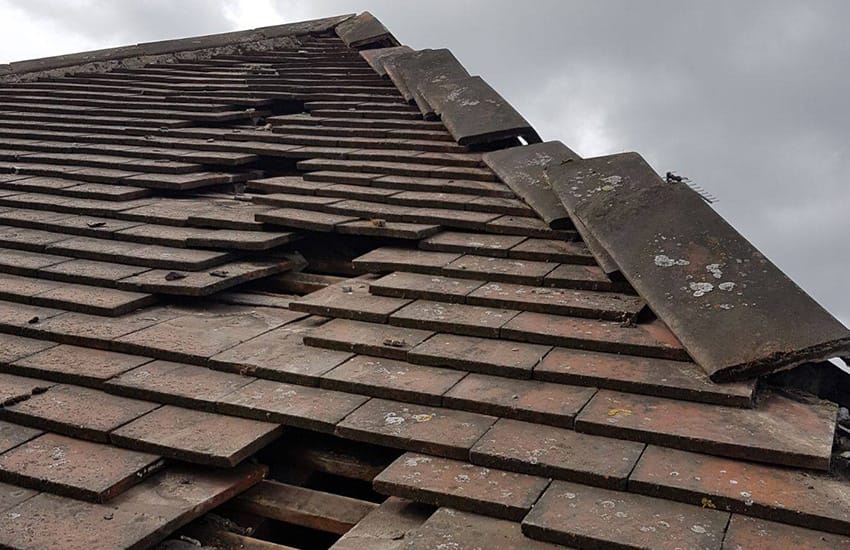
Tile Roof Restoration Adelaide Eastern Suburbs
Tile roof restoration in Adelaide costs $3,500 to $7,000 for concrete tile on an average single-storey home and $5,500 to $9,000 on terracotta, covering pressure cleaning, broken tile replacement, ridge rebedding, repointing and a coating system. Concrete and terracotta are different jobs, and older terracotta that has started to fret is often not a restoration candidate at all.
Get a Free Tile Roof Restoration Quote
We respond to most enquiries the same business day.
Two materials, two different jobs
Concrete tile restoration means clean, repair, rebed, repoint and then coat. Terracotta restoration means clean, repair, rebed, repoint - and generally not coat. Anyone quoting you the same scope and the same price for both has not looked closely at your roof. We inspect and price the material you actually have, with $0 call out.
Concrete Tile and Terracotta - What Actually Differs
| Factor | Concrete tile | Terracotta tile |
|---|---|---|
| Typical Adelaide era | 1960s onward, the standard on post-war and outer suburban homes | Pre-1940s character housing, common through Burnside and the inner east |
| How it fails | Delaminates - the surface layer lifts and flakes away, taking the colour with it | Frets - the surface crumbles to a fine powder, and the tile becomes brittle |
| Service life | Around 50 years for the coating and surface, longer for the tile body | Frequently 50 to 100 years, but fretting can begin at any point after roughly 40 |
| Replacement tiles | Boral and Monier profiles still manufactured - a supplier order | Most pre-1940s profiles discontinued - sourced from salvage stock |
| Can you walk it | Yes, with normal care on the tile batten line | Often not. Fretted terracotta is brittle and breaks underfoot, so access is by board and ladder |
| Should it be coated | Yes - coating is the point of the job and where the visible transformation comes from | Generally no. Clear glazes and sealers on terracotta are an upsell, not a repair |
| What restoration means | Clean, replace broken tiles, rebed and repoint ridges, seal, then two colour coats | Clean, replace broken tiles, rebed and repoint ridges - and stop there |
| Price band | $3,500 - $7,000 on an average single-storey home | $5,500 - $9,000, driven by salvage sourcing and slower, more careful access |
The single most common mistake in Adelaide tile roof restoration quoting is treating a terracotta roof as a concrete roof with a different colour. They fail differently, they are accessed differently, and one of them should not be coated.
What a Tile Roof Restoration Actually Includes
A full tile roof restoration is six pieces of work, not one. Any quote worth comparing itemises all of them, because the gap between a real restoration and a paint job is entirely in which steps get skipped.
- Full inspection and report. Every tile checked for cracks, slippage and fretting - a tile off roof level is usually a symptom rather than the fault, and we look for what moved it - all ridge and hip lines assessed, valleys and flashings inspected. This is where we find out whether your roof is a restoration candidate at all.
- Pressure clean of every tile. High-pressure washing lifts decades of moss, lichen, dirt and loose surface material. On a concrete roof this is also what exposes the true condition underneath - roofs that looked tired frequently turn out to need forty tiles replaced.
- Anti-fungal treatment. Applied after cleaning to kill spores in the pores of the tile so moss does not simply regrow within two seasons.
- Broken tile replacement. Cracked, slipped and missing tiles replaced with matched profiles. On concrete that is a supplier order. On terracotta it means salvage sourcing.
- Ridge rebedding and repointing. Every ridge and hip cap lifted, re-bedded in fresh mortar where the bedding has failed, then pointed with a flexible pointing compound rather than rigid cement. The tile roof cement under a ridge cap is bedding mortar, and once it has cracked and let go, pointing over the top of it only hides the problem. Detail on roof repointing and rebedding.
- Sealer and coating, on concrete. A penetrating sealer coat followed by two full colour coats of a membrane system. This step is where a concrete roof gets its life back - and the step that does not belong on terracotta.
Roof restoration on tiles is the most cost-effective whole-roof option available when the structure underneath is sound. Against $25,000 to $40,000 + GST for a full roof replacement, a restoration at $3,500 to $7,000 buys another one to two decades on a roof that does not need replacing yet.
Fretting - the One Thing That Decides Whether Terracotta Can Be Restored
Fretting is terracotta breaking down at the surface, turning to a fine sandy powder that washes into the gutters after rain. It is the single most important thing to establish before anyone quotes a terracotta roof, and it is the reason a phone quote on an old tile roof is worthless.
The uncomfortable truth, which the Adelaide trade is fairly open about, is that fretting cannot be predicted from age. Oz-Roof, an Adelaide restoration company, puts it plainly: while a concrete tile roof averages around fifty years, terracotta roofs "may start to fret at any point after 40". Other operators are blunter still - some very old terracotta roofs never fret, while younger ones do, and two roofs of the same age on the same street can behave completely differently.
The causes cited across the industry are batch variation in the original clay, salt in the air, and general environmental exposure. Nobody can point to one reliably. What that means practically is that your neighbour's quote tells you nothing about yours.
Why it matters so much:
- A fretting tile will not take weight. It breaks underfoot. That turns a routine walk-over into a job requiring boards and roof ladders, which is slower and more expensive - and it means a cheap quote from someone who has not been on the roof is a quote from someone who does not yet know what the job is.
- Fretting is not repairable. There is no coating, sealer or treatment that reverses it. Coating a fretting roof seals powder under a membrane and makes the eventual removal worse.
- Partial fretting is common and workable. Where only a portion of the roof has gone, matched salvage tiles can replace the affected area and the rest of the roof restored normally.
- Advanced fretting rules out terracotta roof restoration entirely. Where fretting is widespread, the honest answer is that this is a roof replacement conversation, not a restoration one.
We establish which of those three you have at inspection, before a price is quoted. That is the whole reason the call out is free.
Why Coating Terracotta Is Usually the Wrong Call
Terracotta does not need a colour coat, and putting one on is one of the more common ways Adelaide homeowners waste several thousand dollars.
A terra cotta roof tile - terracotta and terra cotta are the same word - carries its colour all the way through the body of the tile rather than in a surface layer. That is why hundred-year-old terracotta still looks like terracotta while a forty-year-old concrete roof has faded to grey. There is no colour to restore, so there is nothing for a colour coat to do except sit on top of a material that was performing fine without it.
The upsell to watch for is the clear glaze or sealer for terracotta tiles. One Adelaide restoration company advertises specifically that it does not sell them, which tells you how routinely they are pushed. The pitch is that sealing reduces porosity and slows lichen growth. The problem is that terracotta is meant to breathe, a sealed tile traps moisture behind the coating, and where the tile is already fretting a sealer locks the degrading surface in place rather than addressing it.
What terracotta genuinely needs is unglamorous and much cheaper: cleaning, broken tile replacement, and the ridge and hip lines rebedded and repointed properly. On the overwhelming majority of terracotta roofs, the pointing has failed and the tiles have not. Fix the pointing.
If what you actually want is a colour change, that is a different conversation and a different service - see roof painting, which is the right answer on concrete tile and metal and the wrong answer on terracotta.
Tile Roof Cleaning - Pressure, Chemical and What Not to Do
Tile roof cleaning is the first physical step of a restoration and it is also the service people most often want on its own. Both are fine, with one caution below.
Concrete tile roof cleaning is the standard case and pressure is the standard method. High-pressure water strips moss, lichen, dirt and the loose degraded surface layer off the tile, and it is genuinely transformative on a chalky roof. To pressure wash tile roof surfaces properly you work systematically down the roof off a safe working position, control where the runoff goes, and clear the gutters afterwards - a pressure clean pushes a remarkable amount of material into them.
The best way to clean roof tiles depends on the tile. Power washing roof tiles at full pressure suits sound concrete, and you can pressure clean roof tiles of that type hard without damaging them. Cleaning roof tiles with pressure washer equipment at reduced pressure suits aged concrete and modern terracotta. And you do not jet wash roof tiles that are fretting at all - you will strip tile, not dirt. Pressure washing roof damage is real and it is nearly always caused by using full pressure on a surface that could not take it. The equipment is the same; the pressure and the technique are not, which is most of the difference between a roof that comes up beautifully and a roof that comes up damaged.
Chemical cleaning terracotta roof tiles is the gentler alternative where the tile is too fragile for full pressure. An anti-fungal or biocide treatment kills the growth and lets weather remove it over following weeks. Clay roof cleaning and clay tile roof cleaning follow the same logic - terracotta and clay are the same material, and both reward patience over pressure. It is slower and less immediately dramatic, and on a brittle roof it is the correct call.
Anti-fungal treatment after cleaning is not optional. Pressure cleaning removes visible moss but leaves spores in the pores of the tile. Without a treatment step the roof looks excellent for a season and then greens over again, which is why cheap clean-only jobs so often disappoint by the following winter.
One hard rule beyond the tile itself: never pressure clean an asbestos cement roof. That is a different material with different rules, covered on asbestos roof replacement.
Clean roof tiles are also easier to inspect. A large share of the cracked tiles we replace are only visible once the moss is off.
Tile Roof Maintenance Between Restorations
Most of what keeps a tile roof out of trouble costs nothing and takes an afternoon.
Concrete tile roof maintenance runs on the coating's clock. A properly applied membrane has a working life of fifteen to twenty years, so the sensible cycle is a visual check each year, gutters cleared twice, and a proper reassessment somewhere around year fifteen. Tile roof maintenance cost between restorations is essentially the price of a gutter clean, unless an inspection turns up broken tiles.
Terracotta roof maintenance after a terracotta roof restoration is a different clock, because there is no coating counting down. What ages is the pointing along the ridge and hip lines, which typically wants attention every twenty to thirty years. Clay tile roof maintenance and Spanish tile roof maintenance follow the same pattern - the tiles outlast everything holding them in place, so the mortar is what you watch.
For both materials the three things worth doing yourself: clear the gutters before winter, look up after every serious storm, and check inside the roof space for daylight or staining once a year. The cheapest roof problem is always the one found early.
On choosing who does the work. There is no licence specific to tile roofing in South Australia, so "tile roof specialists" is a claim rather than a credential, and every roofing company in Adelaide will tell you they are the best tile roofing company going. Two questions cut through it. Ask whether the tile roofer quoting you actually went onto the roof, and ask for the coating warranty in writing. Genuine roof tile specialists answer both without hesitating, because tile roof contractors who work this way have nothing riding on you not asking. Most tile roofing companies quoting from the driveway are not counting your broken tiles - they are guessing, and the guess is priced to win the job rather than to do it.
Restore, Repair or Replace Your Tile Roof
| What you are seeing | The right call | Why |
|---|---|---|
| Concrete tiles chalky and faded, structure sound | Full restoration | Textbook case. The surface has delaminated but the tile body and structure are fine. Clean, repair, rebed, repoint and coat. |
| A handful of cracked or slipped tiles, rest of roof fine | Roof repairs, not restoration | Isolated faults do not justify a whole-roof job. Repairs run $300 to $1,500 and the inspection is free. |
| Pointing crumbling along the ridges, tiles themselves fine | Repointing and rebedding | The most common failure on an old tile roof by a wide margin. Priced on total ridge and hip length rather than roof area. |
| Terracotta shedding sandy powder into the gutters | Inspection first - fretting assessment | Partial fretting can be replaced with salvage tiles and the roof restored. Widespread fretting means replacement. Only an on-roof look tells you which. |
| Moss and lichen across the whole roof, no other faults | Clean and treat, then reassess | Cleaning frequently reveals cracked tiles hidden under growth. Reassess scope after the roof is clean rather than before. |
| Leak with no visible damage from the ground | Roof leak repairs | Find the cause before committing to a whole-roof job. Many leaks are one flashing or one valley, not a roof at end of life. |
| Sagging roofline, cracked battens, widespread fretting | Roof replacement | Restoration coats the surface. It does nothing for a failing structure, and a coating on a roof that needs replacing is money spent twice. |
| Terracotta, sound tiles, you want it a different colour | Reconsider | Terracotta carries colour through the tile body. There is no faded surface layer to restore, and coating it is the upsell covered above. |
Restoration is the right answer on a specific kind of roof - surface-level problems, sound structure. Where the structure has gone, or the faults are isolated, something else is cheaper or more honest.
Concrete Tile Roof Restoration Cost in Adelaide
| Scope | Cost | What drives it |
|---|---|---|
| Concrete tile restoration, 3 bed single storey, fair condition | $3,500 - $5,000 | Standard pitch and easy access. Boral or Monier profile still available, so replacement tiles are a supplier order. |
| Concrete tile restoration, larger or more damaged roof | $5,000 - $7,000 | More roof area, more broken tiles, ridges needing full rebed rather than repoint only. |
| Terracotta tile roof restoration | $5,500 - $9,000 | Salvage sourcing for discontinued profiles, slower board-and-ladder access on brittle tile, and the fretting assessment. |
| Two storey, steep pitch or scaffold access | Add to the above | Height safety provisions and slower working. Assessed at inspection rather than estimated over the phone. |
| Tile roof cleaning only | Quoted on inspection | Roof area and how much lichen and biological growth has established. |
| Roof painting only, single storey to ~250m2 | ~$6,500 + GST | Coating a roof already cleaned and repaired. See roof painting. |
| Tile roof repairs, isolated faults | $300 - $1,500 | See roof repairs - the right call when problems are not widespread. |
| Tile-for-tile roof replacement, for comparison | $25,000 - $40,000 + GST | Five to ten times the cost of restoration, which is exactly why the inspection matters. |
Published Adelaide market figures put restoration between $3,000 and $8,500 depending on operator and roof, with terracotta consistently priced into the higher band. Our figures sit mid-market. Every quote is fixed in writing before work starts, with $0 call out and a $100 refundable deposit on acceptance.
What Cheap Tile Roof Restoration Quotes Leave Out
Adelaide has a genuine three-tier market for this job, and the spread is wide enough that comparing quotes on price alone tells you almost nothing.
At the bottom are the roadside-sign operators - "roofs painted $1,850" - which one Adelaide company politely calls the Cheapies. At the top, franchise operations reportedly quote $15,000 to $18,000 for the same work, because a large share of that price is paying a commissioned salesperson who came to your house. Independent operators sit between at roughly $3,000 to $8,500.
What a suspiciously cheap tiled roof restoration cost usually means:
- Under about $2,000, it is house paint, not a membrane system. Roof membrane and acrylic house paint are not the same product and do not last the same time. This is the single most common substitution.
- No mention of rebedding the ridges. Pointing over failed bedding looks identical on day one and leaks within a couple of years. Ridge lines are where tiled roofs actually fail.
- No written coating warranty. A real membrane system carries a written warranty, commonly fifteen years. No warranty in writing means no manufacturer system behind the product.
- A price given without anyone going on the roof. Nobody can count your broken tiles or find fretting from the driveway. "From" pricing is bait.
- Door knockers with a today-only price. The urgency is the product.
The reverse also holds. A quote much higher than the independent band is not automatically better work - on a franchise job a substantial portion is sales overhead rather than roofing.
Broken Tile Replacement and Profile Matching
Every tile roof restoration replaces tiles, and how many is the largest single variable in the price. A concrete roof in good condition might need a dozen. A chalky roof that has been walked on by tradespeople for thirty years can need two hundred.
Concrete is straightforward. A concrete or cement tile roof is the easier of the two to match, because Boral and Monier are the two dominant Australian manufacturers and their common profiles remain in production, so matching is a supplier order. Colour will not match a weathered roof exactly, which is one more reason concrete roofs are coated at the end of the job - the coat unifies old and new tiles.
Terracotta roof restoration is a sourcing exercise as much as a roofing one. The roof restoration tiles themselves are the constraint. Most profiles laid on Adelaide's character housing before the 1940s have not been manufactured in decades. Replacements come from salvage - tiles reclaimed from demolished roofs of the same era and pattern. Good salvage yards hold stock by profile, but availability genuinely varies, and any roofer promising same-week turnaround on matched terracotta has not checked.
This is also why we inspect before quoting rather than after. The difference between "twelve tiles" and "eighty tiles, three of which are a discontinued profile" is the difference between two quite different prices, and finding that out mid-job serves nobody.
On a heritage property the finished profile and colour may also be constrained by the overlay. In Dulwich, where 79 properties sit inside Historic Area Overlay Bur1 and much of the housing stock is century-old terracotta, what you are permitted to put back is a planning question as much as a roofing one - and it is the single strongest argument for restoring a terracotta roof rather than replacing it, because restoration keeps the original material on the building.
Coating Systems, Sealing and the Warranty That Should Come With Them
On concrete tile, the coating is what you are actually paying for, and coating systems are not interchangeable.
A proper system is three applications, not one. A penetrating sealer goes on first and soaks into the cleaned tile, binding the surface and giving the colour coats something to hold to. Then two full colour coats of a roof membrane. Skipping the sealer, or applying one coat instead of two, is invisible on handover day and obvious in three years.
Membrane is not paint. A roof membrane is a thick, flexible, water-resistant coating engineered to expand and contract with a roof surface that moves through a forty-degree temperature swing in a single Adelaide summer day. House paint is not, and it fails by cracking and peeling. Dulux Acratex is the system most commonly specified in Adelaide, and some restorers hold manufacturer application certification for it, which is worth asking about.
The warranty is the tell. A membrane system applied by a certified applicator carries a written warranty - fifteen years is the common figure across Adelaide operators. If a quote does not put a coating warranty in writing, there is no manufacturer system standing behind it.
To reseal roof tiles that were coated years ago is a smaller job than a first restoration, provided the previous system is sound and adhering. Where a previous cheap coat is peeling, it has to come off first, which frequently costs more than the original job should have.
Which Adelaide Suburbs Have Which Tile Roofs
The eastern suburbs are not one roofing market, and knowing which stock sits where is most of the reason we can tell you over the phone what your job probably is before we have seen it.
Burnside, College Park and Toorak Gardens are dominated by pre-war character housing carrying original terracotta. These are the roofs where the pointing has failed and the tiles have not, where discontinued profiles mean salvage sourcing, and where the honest answer is frequently repointing rather than a full restoration. They are also the roofs where a coating upsell does the most damage. Terracotta roof restoration in this part of Adelaide is usually a smaller job than the owner expects, not a larger one.
Norwood, St Peters and Kensington carry a heavy concentration of mid-century concrete tile, much of it laid in the 1960s and now at forty to fifty years - precisely the window where the surface has delaminated, the roof looks chalky, and a restoration delivers the most visible result for the money. This is our most common tile roof restoration Adelaide job by a wide margin.
Walkerville and Dulwich mix both, with newer builds more often Colorbond already. Where the tile is terracotta and the property sits inside a Historic Area Overlay, the material question becomes a planning question.
Magill, Rostrevor and Campbelltown run to post-war concrete tile and later infill, generally more accessible roofs on simpler rooflines, which sits at the lower end of the price band.
We work across all of it from a base in Kensington Park. Searches for tile roof restoration near me and roof tile restoration near me mostly return companies covering the whole metro area; ours is deliberately the eastern suburbs, because concrete roof tiles problems here follow the housing stock and the housing stock changes by suburb. Tile roof cleaning companies near me is a related search and cleaning is a stage of restoration rather than a service we sell separately. If you want the broader picture of what we do across the metro area, the Adelaide roof repairs overview covers the full range of services.
Our Tile Roof Restoration Process
Step 1. Free inspection and material assessment
We get on the roof. Every tile checked for cracks and slippage, terracotta checked for fretting, all ridge and hip lines assessed, valleys and flashings inspected. $0 call out.
Step 2. Fixed written quote
One firm price with every step itemised, including how many tiles need replacing and whether coating is part of the job. $100 refundable deposit on acceptance, nothing further until completion.
Step 3. Pressure clean and treat
High-pressure clean of every tile, or chemical treatment where the tile is too fragile for full pressure, followed by an anti-fungal application to stop regrowth.
Step 4. Reassess and replace broken tiles
A clean roof shows faults that moss was hiding. Cracked, slipped and missing tiles replaced with matched profiles - supplier stock on concrete, salvage on terracotta.
Step 5. Rebed and repoint ridge capping
Ridge and hip caps lifted and re-bedded in fresh mortar where the bedding has failed, then pointed with flexible pointing compound rather than rigid cement.
Step 6. Seal and coat, on concrete
Penetrating sealer coat, then two full colour coats of membrane. On terracotta this step is deliberately omitted and the job finishes at step 5.
Step 7. Gutter flush, clean-up and handover
Gutters flushed of the material a pressure clean puts into them, site cleaned, final inspection walked with you, and the written coating warranty issued.
FAQs
Tile Roof Restoration Questions
How much does tile roof restoration cost in Adelaide?
Tile roof restoration Adelaide pricing splits by material. Concrete tile roof restoration cost runs $3,500 to $7,000 for an average single-storey home, and terracotta tile roof restoration runs $5,500 to $9,000. Terracotta roof restoration is the dearer of the two in every case. Published Adelaide market figures sit between $3,000 and $8,500 depending on the operator, so ours are mid-market. The average cost of tile roof restoration is driven mostly by how many tiles need replacing and whether ridges need full rebedding or only repointing.
Why is terracotta roof restoration more expensive than concrete?
Three reasons. Replacement tiles come from salvage rather than a supplier because most pre-1940s profiles are discontinued. Terracotta is brittle and often cannot be walked, so access is by board and ladder, which is slower. And a fretting assessment is required before any work is priced. Terracotta roof restoration cost typically sits $2,000 above the equivalent concrete job, and any terracotta roof restoration quoted at concrete prices is a quote from someone who has not identified the material.
What is fretting on a terracotta roof?
Fretting is the tile surface breaking down into a fine sandy powder that washes into the gutters. It cannot be repaired, sealed or coated over. Critically, it cannot be predicted from age - Adelaide operators report terracotta may begin fretting at any point after about 40 years, with batch variation in the clay, salt air and general exposure all cited as causes. Two roofs of the same age on one street can differ completely.
Should a terracotta roof be sealed or coated?
Generally no. Terracotta carries its colour through the body of the tile rather than in a surface layer, so there is no faded coating to restore. Clear glazes and sealers marketed for terracotta tiles are widely regarded in the Adelaide trade as an upsell - one local restoration company advertises that it refuses to sell them. What terracotta genuinely needs is cleaning, broken tile replacement and proper rebedding and repointing.
What is the best way to clean roof tiles?
A systematic high-pressure wash worked down the roof, followed immediately by an anti-fungal treatment. The treatment matters as much as the wash - pressure cleaning removes visible moss but leaves spores in the pores of the tile, which is why clean-only jobs green over again within a season. Never pressure wash a fretting terracotta roof, and never pressure clean asbestos cement sheeting at all.
How long does a tile roof restoration take?
Three to five working days for a typical single-storey concrete tile roof, spread across cleaning, tile replacement, rebedding and repointing, then sealing and two colour coats with drying time between them. Terracotta is often quicker overall because the coating stage is omitted, but slower per stage because of access. Weather extends all of it - coating cannot go on a wet roof.
Is tile roof restoration worth it?
It is worth it when the roof structure is sound and the problems are surface-level - worn pointing, faded or porous tiles, isolated cracked tiles. At $3,500 to $7,000 against $25,000 to $40,000 + GST for a full replacement, restoration is five to ten times cheaper and buys another one to two decades. It is not worth it on a sagging roofline, failed battens or widespread terracotta fretting.
How often does a tile roof need restoring?
Tile roof maintenance is generally a fifteen to twenty year cycle on concrete, matching the working life of a properly applied membrane system. Terracotta roof maintenance is different - there is no coating on a clock, so the driver is the pointing, which typically needs attention every twenty to thirty years. An annual gutter clean and a visual check after major storms costs nothing and catches most problems early.
Can you restore a clay or ceramic tile roof?
Clay roof tiles and terracotta are the same material under different names, so the same rules apply - clean, replace broken tiles, rebed and repoint, and do not coat. Genuine ceramic tiles for roof use and Spanish tile roof profiles are handled the same way, with sourcing the main variable. Clay tile roof cleaning is usually done chemically rather than at full pressure where the tile is aged or brittle.
Do I need council approval for a tile roof restoration?
Restoration in the same material and colour generally does not require development approval, because nothing about the roof is changing. Changing colour on a property inside a heritage or character overlay area can, and much of Adelaide's eastern suburbs sits in exactly that category. We check the overlay as part of quoting rather than after.
What warranty comes with a tile roof restoration?
A membrane coating system applied by a certified applicator carries a written coating warranty, and fifteen years is the common figure across Adelaide operators. All workmanship is separately guaranteed. If a quote does not put the coating warranty in writing, that is a strong signal there is no manufacturer system behind the product being applied.
What We'd Actually Recommend
If your concrete tile roof looks chalky and faded but nothing is leaking, restore it now rather than later. This is the ideal window. The tile body is sound, the surface has simply worn out, and a restoration at this stage costs a fraction of what waiting for water ingress will.
If you have terracotta, get the fretting assessed before you consider anything else. It is the single fact that determines whether you are looking at a restoration, a repoint, or a replacement, and nobody can tell you from the ground or over the phone. It costs nothing to find out.
If someone has quoted you a clear glaze or sealer for terracotta, get a second opinion. It is the most common unnecessary line item on an Adelaide tile roof quote, and terracotta was performing without it for the last eighty years.
If only the ridges have failed, do not buy a whole restoration. Failed pointing with sound tiles is by far the most common condition on old Adelaide tile roofs, and repointing and rebedding on its own is a much smaller job. A good roofer will tell you that; a salesperson on commission will not.
Related Roofing Services
Roof Restoration
The full restoration service across all roof materials, including metal, with the complete process and warranty detail.
Read more →Roof Repointing & Rebedding
Ridge and hip capping on its own, which is what a large share of tile roofs actually need rather than a full restoration.
Read more →Roof Repairs
Cracked, slipped and broken tiles as isolated faults, from $300 to $1,500 with a free inspection.
Read more →Roof Replacement
Where fretting is widespread or the structure has gone, and restoration is no longer the honest answer.
Read more →Book a Free Tile Roof Inspection
Fixed written quotes for tile roof restoration across Burnside, Norwood, Toorak Gardens, Magill and Adelaide's eastern suburbs. We get on the roof before we price it, so you find out what your roof actually needs. $0 call out, $100 refundable deposit on acceptance.