
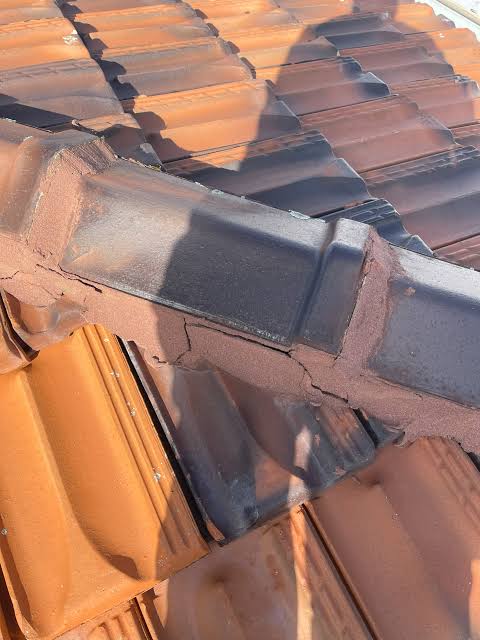
Roof Repointing & Rebedding Adelaide Eastern Suburbs
Roof repointing in Adelaide costs $1,500 to $3,500 for a typical roof and rebedding $3,000 to $6,500, because they are two different jobs. Pointing is the visible mortar you can see from the ground. Bedding sits underneath the cap tile, is invisible from above, and costs roughly twice as much to replace.
Get a Free Repointing Quote
We respond to most enquiries the same business day.
Repointing and rebedding are two different jobs at two different prices
Repointing replaces the visible mortar along the joint. Rebedding lifts every cap tile off, replaces the mortar bed underneath, then repoints on top. Rebedding costs roughly twice as much - and because the bedding is completely hidden from view, a homeowner has no way of confirming which one was actually carried out. We quote them as separate line items and tell you which your roof needs, with $0 call out.
Roof Pointing vs Bedding - What You Are Actually Buying
| Factor | Pointing | Bedding |
|---|---|---|
| What it is | The mortar along the visible joint between the ridge cap and the roof tiles | A bed of sand and cement underneath the cap tile that holds it in position |
| Where it sits | On the surface, exposed to weather on both sides of every cap | Underneath the cap, completely enclosed |
| Can you see it from the ground | Yes - this is the line of mortar you notice cracking | No. It is invisible from above and from the ground |
| What failure looks like | Hairline cracks, then crumbling, then sand and mortar grit in the gutters | Cap tiles that rock, shift or sit unevenly. Often no visible mortar problem at all |
| Are the cap tiles lifted | No. Best practice is to leave caps in place and point over | Yes. Every affected cap comes off and goes back on a fresh bed |
| Material used | Flexible polymer pointing compound, applied 3 to 4mm thick | Sand and cement mortar, then repointed with flexible compound on top |
| Typical cost | $10 to $12 + GST per cap tile, $1,500 to $3,500 for a typical roof | $21 to $23 + GST per cap tile, $3,000 to $6,500 for a typical roof |
| How often it is genuinely needed | Most tiled roofs, every 20 to 30 years | Rarely. Only where the bed itself has failed, not merely the pointing |
Per cap tile figures are published Adelaide market rates (Oz-Roof, 2022). The important line is the third one: bedding cannot be inspected once the caps are back down, which is why the distinction is worth understanding before you accept a quote.
The Same Job Has About Fifteen Names
Before anything else, a translation, because the Australian roofing trade has never settled on one term and homeowners end up comparing quotes that use different words for identical work.
All of these describe the same service: roof repointing, roof re pointing, re pointing roof work, tile repointing, repointing roof tiles, roof pointing repair, roof tile pointing repair, ridge cap pointing, roof ridge capping repairs, roof capping repair, fixing ridge capping, and tile roof ridge cap repair. Some roofers write it as one word, some as two, some hyphenated. There is no technical difference between them.
The parts have several names too. The cap tile running along the top of the roof is variously a ridge cap, a roof ridge cover, ridge capping tiles, capping roof tiles, roof tile ridge capping or just tile roof capping. Concrete roof capping tiles and terracotta ones behave differently with age, but the terminology applies to both.
The mortar has two, and this is where confusion costs money. The visible material is pointing. The hidden material underneath is bedding - sometimes called ridge capping cement, roof capping cement or tile roof cement. A cement tile roof and a concrete tile roof are the same thing, and cement tile repair, cement tile roof repair and tile roof mortar repair all refer to work on that same family of roof.
Where the words genuinely matter is pointing versus bedding, which is the next section. Everything else on this list is the same job under a different name, and a quote is not better because it uses a fancier one.
How to Tell Whether You Need Repointing or Rebedding
The test is not what the mortar looks like. It is whether the cap tiles move.
This is the single most useful thing on this page, because pointing failure and bedding failure look almost identical from the driveway and cost twice as different.
Signs you need repointing only - and this is the large majority of Adelaide roofs:
- Hairline cracks running along the mortar line beside the ridge caps
- Crumbling mortar, with sand and grit appearing in the gutters after rain
- Small sections where the pointing has fallen out entirely, leaving a gap
- Cap tiles that are still firmly seated when pressed - they do not move
- Roof otherwise sound, tiles intact, no sagging along the ridge line
Signs the bedding has gone and rebedding roof tiles is genuinely required:
- Cap tiles that rock, shift or lift when pressed by hand
- Caps sitting visibly unevenly, out of line with the run
- Caps that have slipped down the pitch or rotated out of position
- A ridge or hip line that dips or waves where it should be straight
- Whole caps displaced or missing after strong wind
- Daylight visible from inside the roof space along the ridge line
The reason this matters commercially: rebedding costs roughly twice what repointing does, and once the caps are back down nobody can verify which was done. One Adelaide restoration company states publicly that "many other companies use these terms loosely but actually refer to the service of roof pointing" - selling the more expensive job and delivering the cheaper one.
Our position is simple. We press every cap on the roof, we tell you which lines move and which do not, and we quote pointing and bedding as separate line items so you can see exactly what you are paying for. If only the north hip has failed bedding and the rest of the roof needs a point over, that is what the quote says.
Flexible Pointing Is the Code Standard, Not a Sales Pitch
The National Construction Code requires "flexible pointing material complying with AS 2050" on tile roofs. That is not a preference a roofer has adopted - it is the building code pointing at an Australian Standard.
AS 2050:2018 - Installation of Roof Tiles sets the requirements for placement, fixing, sarking, battens, flashing, bedding and pointing. It is the standard that governs how ridge capping cement and pointing compound are supposed to be specified and applied on an Australian tiled roof.
Being precise about what that means for your roof: the code governs installation, so it does not retroactively make an existing sand-and-cement roof non-compliant. What it does establish is that flexible pointing complying with AS 2050 is the standard, and rigid cement is not. When a roof gets repointed today, flexible compound is not the upgrade option - it is the specification.
This is worth knowing because "we use a flexible compound" appears on nearly every roofing website in Adelaide as though it were a differentiator. It is not a differentiator. It is the baseline, and any quote that does not name the compound or does not mention flexibility at all is a quote worth a second question.
Almost no Adelaide roofing site cites either the NCC clause or AS 2050. We do, because a homeowner comparing four quotes deserves to know there is an actual standard behind the claim rather than four competing opinions.
Why the Old Sand and Cement Pointing Fails
If your home is more than about twenty years old, the original ridge capping mortar is almost certainly a sand and cement mix. That was standard practice at the time and it was not a mistake - it was simply the material available.
It fails for one reason: a roof moves and cement does not.
A tiled roof expands and contracts every single day. An Adelaide summer can swing forty degrees between a 6am roof surface and a 3pm one, and the tiles, battens and timber underneath all move at different rates. Rigid cement has no capacity to accommodate that. It cracks - first hairline, then wider, then it lets go in sections.
Once the pointing cracks, the sequence is predictable:
- Water enters the joint. Rain runs into the crack rather than off the cap.
- The bedding beneath gets wet. Sand and cement bedding that stays damp begins to break down, and this is how a pointing problem becomes a bedding problem.
- The cap loosens. With the bed deteriorating, the cap has nothing solid holding it.
- The leak appears somewhere else entirely. Water tracks along battens before it drops, which is why ridge failures so often show up as a stain two metres from the ridge.
Modern pointing compounds solve the movement problem directly. They incorporate polymers and flexible rubbers, so the material moves with the roof rather than fracturing against it. Applied correctly a point over is a smooth layer roughly 3 to 4mm thick, laid over a properly prepared surface - where the old pointing is uneven, a grinder with a diamond blade cuts back to a clean bonding face first.
That preparation step is where cheap roof pointing repair work gets skipped, and it is what separates a lasting roof pointing job from one that lifts in two summers. New compound smeared over loose, crumbling old cement bonds to loose crumbling old cement, and comes away with it.
Roof Repointing Cost in Adelaide
| Scope | Cost | How it is priced |
|---|---|---|
| Roof repointing, typical single-storey home | $1,500 - $3,500 | Total lineal metres of ridge and hip capping, not floor area. A multi-gable roofline carries far more capping than a simple hip roof of the same size. |
| Rebedding and repointing, typical single-storey home | $3,000 - $6,500 | Roughly double the pointing figure, because every cap is lifted, the old bed removed, a new bed laid and then pointed over. |
| Pointing only, per cap tile | $10 - $12 + GST | Published Adelaide market rate. Includes supply and application of the flexible pointing compound. |
| Full rebedding, per cap tile | $21 - $23 + GST | Published Adelaide market rate. The labour of lifting and resetting each cap is the difference. |
| Isolated ridge capping repairs, a few caps | $300 - $1,500 | Storm-displaced or cracked caps as a standalone job. See roof repairs. |
| Repointing as part of a full restoration | Included | Every ridge and hip is repointed within a tile roof restoration at $3,500 to $7,000. |
| Two storey, steep pitch or scaffold access | Add to the above | Height safety provisions and slower working, assessed at inspection rather than estimated over the phone. |
Roof capping cost, repointing roof tiles cost, roof ridge cap repair cost and the cost of repointing roof ridge tiles all describe the same figures above - the table is the answer to every phrasing of the question. Interstate operators publish ridge cap repointing at $25 to $80 per lineal metre depending on market and access, which is a useful cross-check against any quote. Our figures are fixed in writing before work starts, with $0 call out and a $100 refundable deposit on acceptance.
What a Cheap Roof Repointing Quote Leaves Out
Ridge capping repair cost varies more than almost any other roofing line item, and the variation is rarely about the roof. It is about scope.
The old pointing is not cut back. Flexible compound applied over loose, crumbling cement bonds to the loose crumbling cement and lifts with it inside a couple of years. Proper preparation means grinding back to a sound surface first, and it is the step that takes the time.
Only the front elevation is done. Ridge and hip lines visible from the street get repointed and the back of the roof does not. It is invisible from the driveway and it is the most common way a quote comes in low.
Failed bedding is pointed over rather than replaced. A cap that rocks will keep rocking under new pointing, and the new pointing will crack in the same place within a season.
The compound is not named. A quote that says "repoint ridge capping" with no product named is a quote you cannot compare to anything.
The valleys are excluded. Valley pointing is a separate line and frequently omitted without being mentioned.
No workmanship guarantee in writing. Repointing is entirely a workmanship job - there is no manufacturer standing behind the installation, only the roofer.
The opposite failure exists too. A quote well above the market band for a roof where only the pointing has failed is usually a rebedding price applied to a pointing job. Ask which one you are being charged for, and ask which caps moved.
Ridge, Hip and Valley - Three Different Lines, Three Different Jobs
"Repointing" gets used as though a roof has one line of mortar. Most have three, and they fail at different rates.
The ridge is the horizontal line along the very top of the roof. Ridge caps take the most direct weather exposure and the most thermal movement, so this is usually where pointing fails first. It is also where a failure leaks worst, because water entering at the apex has the entire roof to travel through.
The hips are the sloping lines running down from the ridge to the corners of the roof. On a hip roof these carry more total lineal metres of capping than the ridge does. Hip capping fails more slowly than ridge capping but is more prone to slipping, because gravity works along the line rather than across it.
The valleys are the internal angles where two roof planes meet and drain together. Valley tiles are pointed along both sides of the valley iron, and repointing roof valley lines is genuinely different work - it sits in the path of concentrated water flow, so failure there produces leaks faster than anywhere else on the roof. Repointing roof valley runs and roof valley repointing generally are often quoted separately, and a quote that does not mention valleys at all has probably excluded them.
A common Adelaide roof carries more capping than owners expect. A Victorian or Edwardian roofline with multiple gables, a return verandah and several valleys can hold two to three times the lineal metres of a modern hip roof covering the same floor area - which is the single biggest reason repointing quotes vary so much between two houses on the same street.
When Ridge Caps Are Replaced Rather Than Repointed
Sometimes the mortar is not the problem - the cap tile is.
Concrete roof capping tiles crack, chip and break, particularly along the ends where they overlap. Roof capping repair on a tile roof capping run is usually a mix of both jobs - some caps repointed, a few replaced. Terracotta caps become brittle with age and can shatter under foot traffic. Where individual caps have gone, they are replaced as part of the job rather than pointed around.
Matching matters here in the same way it does for field tiles. Concrete profiles from Boral and Monier are still manufactured, so a replacement is a supplier order. Terracotta caps on pre-1940s Adelaide rooflines are usually discontinued and come from salvage, which takes longer and costs more.
Where a large proportion of caps are broken, new ridge roofing - a full run of new cap tiles bedded and pointed from scratch - becomes the sensible option rather than replacing forty caps individually. That is priced as rebedding plus materials, and it is the point at which it is worth asking whether the roof would be better served by a roof restoration that addresses the whole surface rather than the ridge line alone.
One thing we will not do: fix a cracked cap with silicone or roof-and-gutter sealant. It looks like a repair for one summer, then it fails, and it has usually made the eventual proper repair harder by leaving residue on the bonding surface.
Repoint, Rebed, Repair or Restore
| What you are seeing | The right call | Why |
|---|---|---|
| Hairline cracks in the mortar, caps firm underfoot | Repointing | Textbook point over. The bed is sound and only the surface material has aged out. $1,500 to $3,500. |
| Mortar crumbling, grit in the gutters, caps still firm | Repointing, sooner rather than later | The bed is still intact but water is now entering the joint. Left another few years this becomes a rebedding job. |
| Caps rock, shift or sit unevenly | Rebedding | The bed itself has failed. Pointing over a moving cap puts new compound on an unstable base and it cracks again within a season. |
| One or two caps displaced after wind | Roof repairs | An isolated fault does not justify a whole-roof job. $300 to $1,500 with a free inspection. |
| Leak showing near the ridge line | Roof leak repairs first | Find the cause before committing. Water tracks along battens before it drops, so a ridge-area stain is not proof the ridge is the fault. |
| Pointing failed and the whole roof is faded and porous | Tile roof restoration | Repointing is already included in a restoration. Doing it standalone now and restoring in two years means paying for the same work twice. |
| Ridge line dips or waves, caps out of line | Structural inspection, not repointing | A wavy ridge can mean the batten or rafter below has failed. Mortar will not fix a structural problem, and may hide it. |
| Terracotta caps cracking and shedding | Assess the field tiles too | Brittle caps usually mean brittle tiles. If the roof is fretting, a repoint is money into a roof heading for replacement. |
The decision turns on one physical test - whether the caps move. Everything else follows from that.
Why Eastern Suburbs Rooflines Cost More to Repoint
Roof repointing Adelaide wide is priced on total lineal metres of ridge and hip capping on a ridge capping tiled roof rather than on the floor area of the house, and that single fact explains why quotes across Adelaide's eastern suburbs vary so widely.
Burnside, College Park and Toorak Gardens are dominated by pre-war character housing with complex rooflines - multiple gables, return verandahs, bay windows with their own small roofs, and several valleys per house. A Victorian villa can carry two to three times the capping of a modern home with the same floor area. These are also predominantly original terracotta, where replacement caps come from salvage rather than a supplier.
Norwood, St Peters and Kensington run heavily to mid-century concrete tile on simpler hip rooflines. Less capping per house, still-manufactured Boral and Monier profiles, and this is where most of our straightforward repointing work sits.
In Dulwich, 28.5% of dwellings are semi-detached or attached against 14.6% across South Australia - and an attached roofline changes the job again. A shared ridge running over a party wall means the capping continues onto a neighbour's roof, so the practical question of where your work stops has to be settled before anyone starts, not halfway along the run.
Magill, Rostrevor and Campbelltown carry post-war stock on simpler rooflines with good access, which sits at the lower end of the band.
We work across all of it from a base in Kensington Park, and the broader Adelaide roof repairs service covers what we do beyond the ridge line.
Our Roof Repointing and Rebedding Process
Step 1. Free inspection, and we press every cap
We walk the full ridge, hip and valley lines and physically test the ridge caps roof wide for movement. That test is what determines whether you need repointing or rebedding. $0 call out.
Step 2. Fixed written quote, itemised
Pointing and bedding quoted as separate line items, with lineal metres stated and valleys included or explicitly excluded. $100 refundable deposit on acceptance, nothing further until completion.
Step 3. Cut back and prepare
Old pointing ground back to a sound bonding surface with a diamond blade where it is uneven or loose. This is the step cheap quotes skip and the reason their work lifts.
Step 4. Rebed where the bed has failed
Where caps move, they come off, the old bed is removed and a fresh sand and cement bed laid to correct fall and line. Only the runs that need it, not the whole roof by default.
Step 5. Repoint with flexible compound
Flexible polymer pointing compound applied smoothly at 3 to 4mm across every ridge, hip and valley line in scope, meeting the AS 2050 flexible pointing specification.
Step 6. Clear gutters and hand over
Gutters cleared of the mortar debris the job creates, site cleaned, and the roof walked with you before we leave. Workmanship guaranteed in writing.
FAQs
Roof Repointing and Rebedding Questions
How much does roof repointing cost in Adelaide?
Roof repointing cost in Adelaide runs $1,500 to $3,500 for a typical single-storey roof, and rebedding with repointing runs $3,000 to $6,500. Published Adelaide market rates work out at $10 to $12 + GST per cap tile for pointing and $21 to $23 + GST per cap tile for full rebedding. The price is driven by total lineal metres of ridge and hip capping, not by the floor area of the house. Roof capping cost quoted per metre in Adelaide sits within that same band.
What is the difference between repointing and rebedding?
Pointing is the visible mortar along the joint between the ridge cap and the roof tiles. Bedding is the sand and cement bed underneath the cap that holds it in place, and it is invisible from above. Repointing replaces the surface material with the caps left in position. Rebedding lifts every affected cap, replaces the bed underneath, then repoints on top - roughly double the cost.
How do I know if I need rebedding or just repointing?
Press the cap tiles. If they are firm and only the mortar is cracked or crumbling, you need repointing. If they rock, shift, sit unevenly or have slipped down the pitch, the bedding underneath has failed and pointing over it will crack again within a season. Because bedding cannot be seen once the caps are back down, ask any roofer which caps moved and get pointing and bedding quoted as separate line items.
How often does a roof need repointing?
Most Adelaide tiled roofs need repointing every 20 to 30 years, and the driver is the pointing material rather than the tiles. Old sand and cement pointing is rigid and cracks as the roof expands and contracts through the seasons. Modern flexible polymer compounds move with the roof, so a properly repointed roof should last considerably longer than the original cement did.
Can you repoint a roof yourself?
Legally nothing stops you, and pre-mixed flexible pointing compound is sold at hardware stores. Practically there are three problems. Working a full ridge and hip line means extended time on a pitched roof, where falls are the main risk. The preparation matters more than the application - new compound over loose old cement lifts with it. And you cannot assess bedding without lifting caps, so DIY pointing frequently seals over a bedding problem that then reappears.
Does repointing fix a roof leak?
It fixes leaks caused by failed ridge or hip pointing, which are common. It does not fix leaks from cracked tiles, failed flashings, blocked valleys or corroded valley irons. Water tracks along battens before it drops, so a stain appearing near the ridge is not proof the ridge is at fault. We diagnose the actual cause first - see roof leak repairs for how that works.
What is flexible pointing and is it required?
Flexible pointing is a polymer-modified compound that moves with the roof instead of cracking against it. The National Construction Code requires flexible pointing material complying with AS 2050 on tile roofs, and AS 2050:2018 sets the requirements for bedding and pointing. The code governs installation rather than retroactively affecting an existing roof, but it does mean flexible compound is the standard specification for repointing work today, not an optional upgrade.
Do you repoint roof valleys as well as ridges?
Yes, and it is worth asking every roofer you get a quote from. Valley tiles are pointed along both sides of the valley iron, and repointing a roof valley sits directly in the path of concentrated water flow, so failure there causes leaks faster than anywhere else on the roof. Valley pointing is frequently quoted separately or excluded silently. Ours states whether valleys are in scope.
How long does roof repointing take?
One to two days for repointing a typical single-storey roof, and two to four days where rebedding is involved, because every cap has to be lifted, the old bed removed and a new one laid before pointing can start. Weather extends both - pointing compound needs dry conditions to cure properly, so we do not point a roof into rain.
Can broken ridge cap tiles be replaced without redoing the whole roof?
Yes. Isolated cracked or displaced caps are a standard repair at $300 to $1,500 depending on how many and where they sit. Concrete caps from Boral and Monier profiles are a supplier order. Terracotta caps on older Adelaide rooflines are usually discontinued and sourced from salvage. Where a large proportion of caps are broken, a full run of new capping bedded from scratch becomes more economical than replacing them one at a time.
Should I repoint now or wait and do a full restoration?
If the tiles are sound and only the pointing has failed, repoint now - it is the cheaper job and it stops water entering the joint before the bedding beneath starts breaking down. If the roof is also faded, porous or growing moss across the whole surface, repointing is already included in a tile roof restoration, and doing it standalone now means paying for the same work twice within a couple of years.
What We'd Actually Recommend
Press the caps before you accept any quote. It takes a minute and it is the whole diagnosis. Firm caps with cracked mortar means repointing. Moving caps means rebedding. Any roofer who cannot tell you which caps moved has not properly inspected the roof.
Get pointing and bedding as separate line items. They differ by roughly double, and once the caps are back down neither you nor a building inspector can tell which was done. Itemised quoting is the only real protection, and a roofer confident in their scope has no reason to resist it.
Do not let a cracked ridge run for another two years. Failed pointing lets water into the joint, wet bedding breaks down, and a $1,500 to $3,500 repointing job becomes a $3,000 to $6,500 rebedding job. This is one of the few roofing problems where waiting reliably doubles the price.
If the whole roof is tired, price the restoration before the repoint. Repointing is already inside a restoration. Paying for it standalone and then restoring the roof eighteen months later means buying the same ridge line twice.
Related Roofing Services
Tile Roof Restoration
Repointing is included within a full restoration, alongside cleaning, broken tile replacement and coating on concrete tile.
Read more →Roof Repairs
Isolated cracked or displaced ridge caps as a standalone job, from $300 to $1,500 with a free inspection.
Read more →Roof Leak Repairs
Where the leak may or may not be the ridge line, diagnosed before anything is quoted.
Read more →Roof Restoration
The full restoration service across all roof materials, with process, warranty and pricing detail.
Read more →Book a Free Ridge Capping Inspection
Fixed written quotes for roof repointing and rebedding across Burnside, Norwood, Toorak Gardens, Magill and Adelaide's eastern suburbs. We press every cap and tell you which lines moved, so you know which job you are paying for. $0 call out, $100 refundable deposit on acceptance.